

Work |
The First NetZero Building for the Minnesota State University Network!
Winona, Minnesota, USA
Interdisciplinary learning, rooted in place
Designed with Perkins&Will’s Minneapolis studio, CICEL brings mathematics, computer science, art, and student services together in one compact academic hub. The project replaces two outdated buildings, strengthens connections across disciplines, and creates a clearer, more welcoming campus arrival.
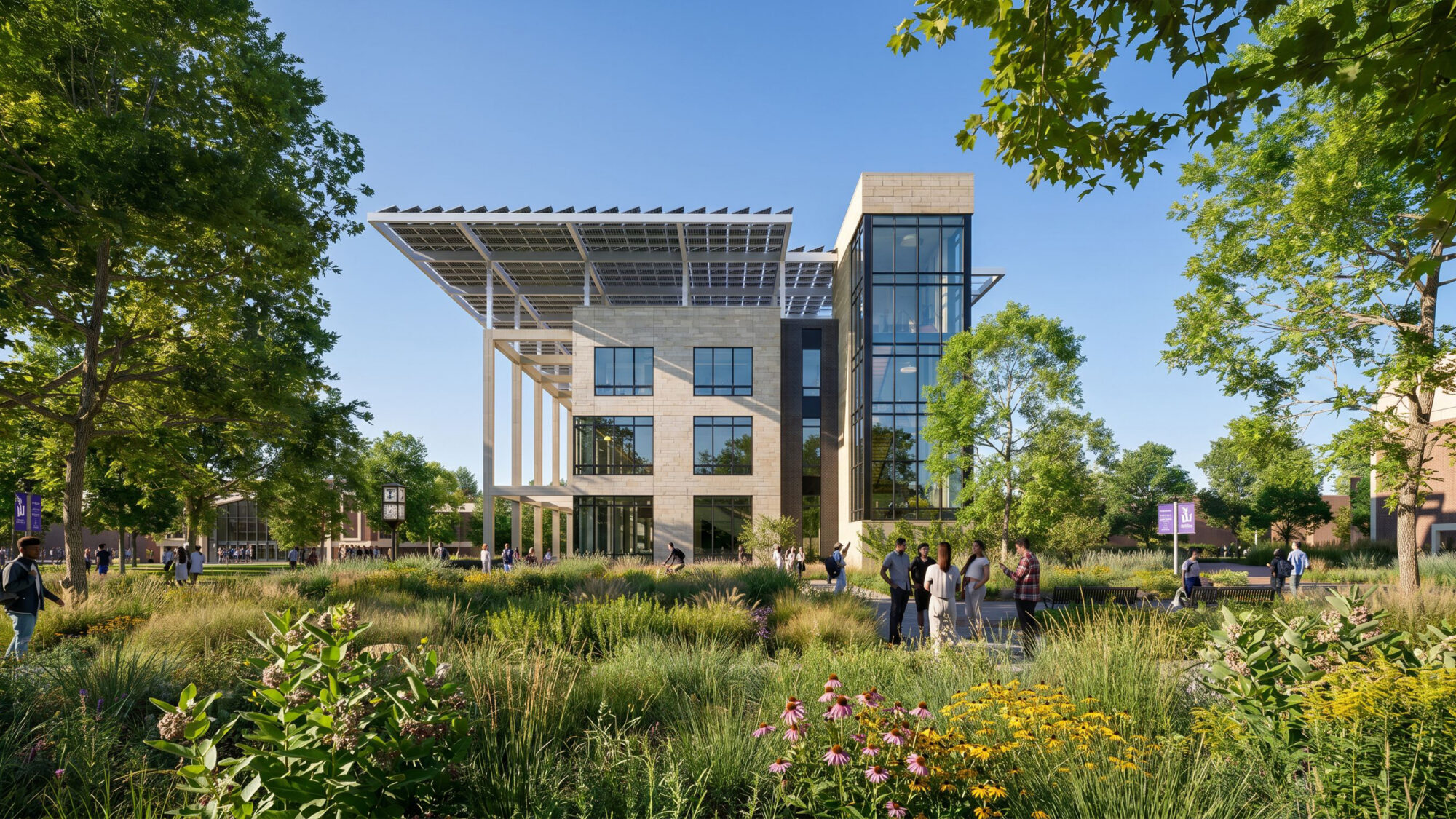
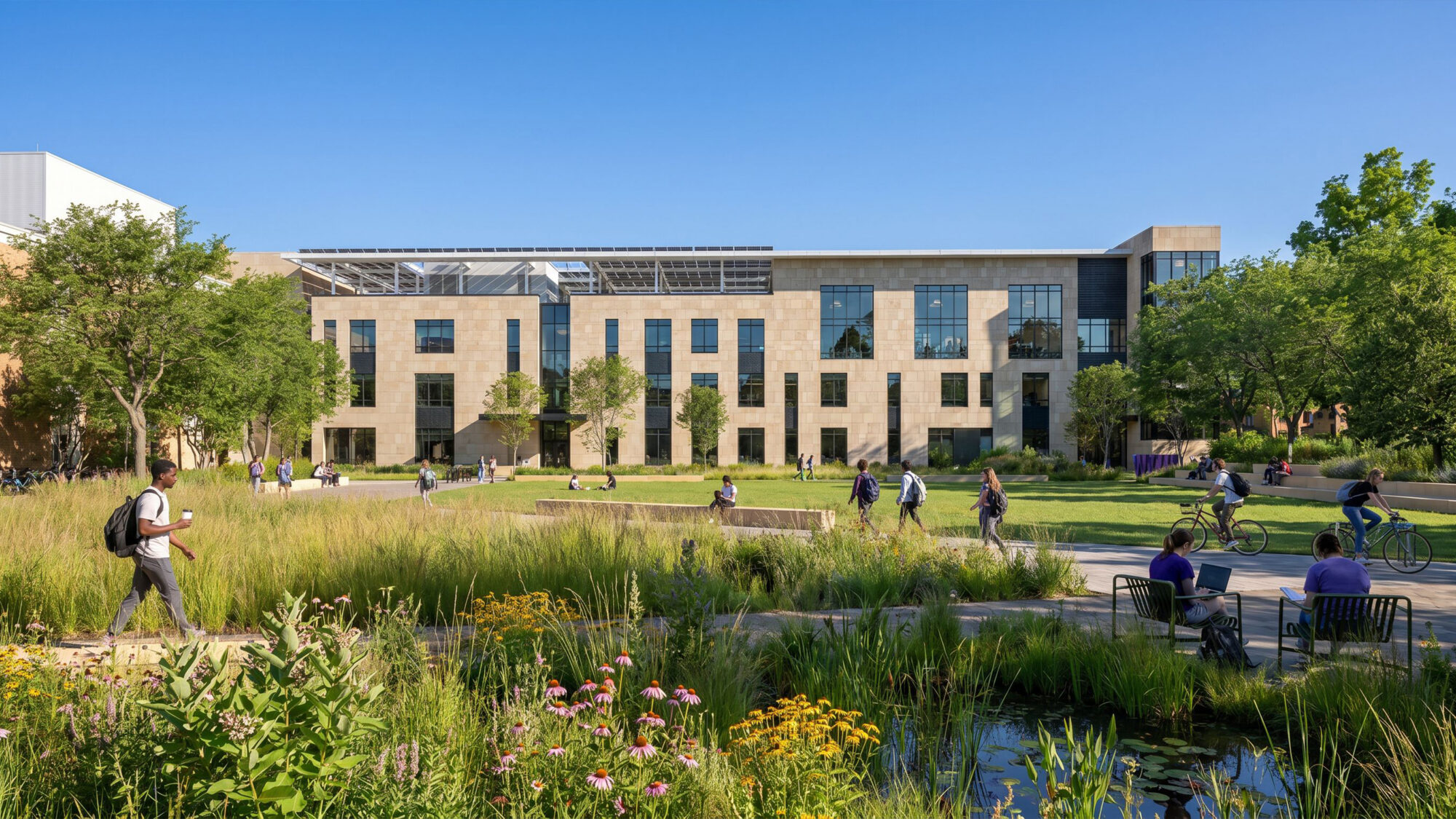
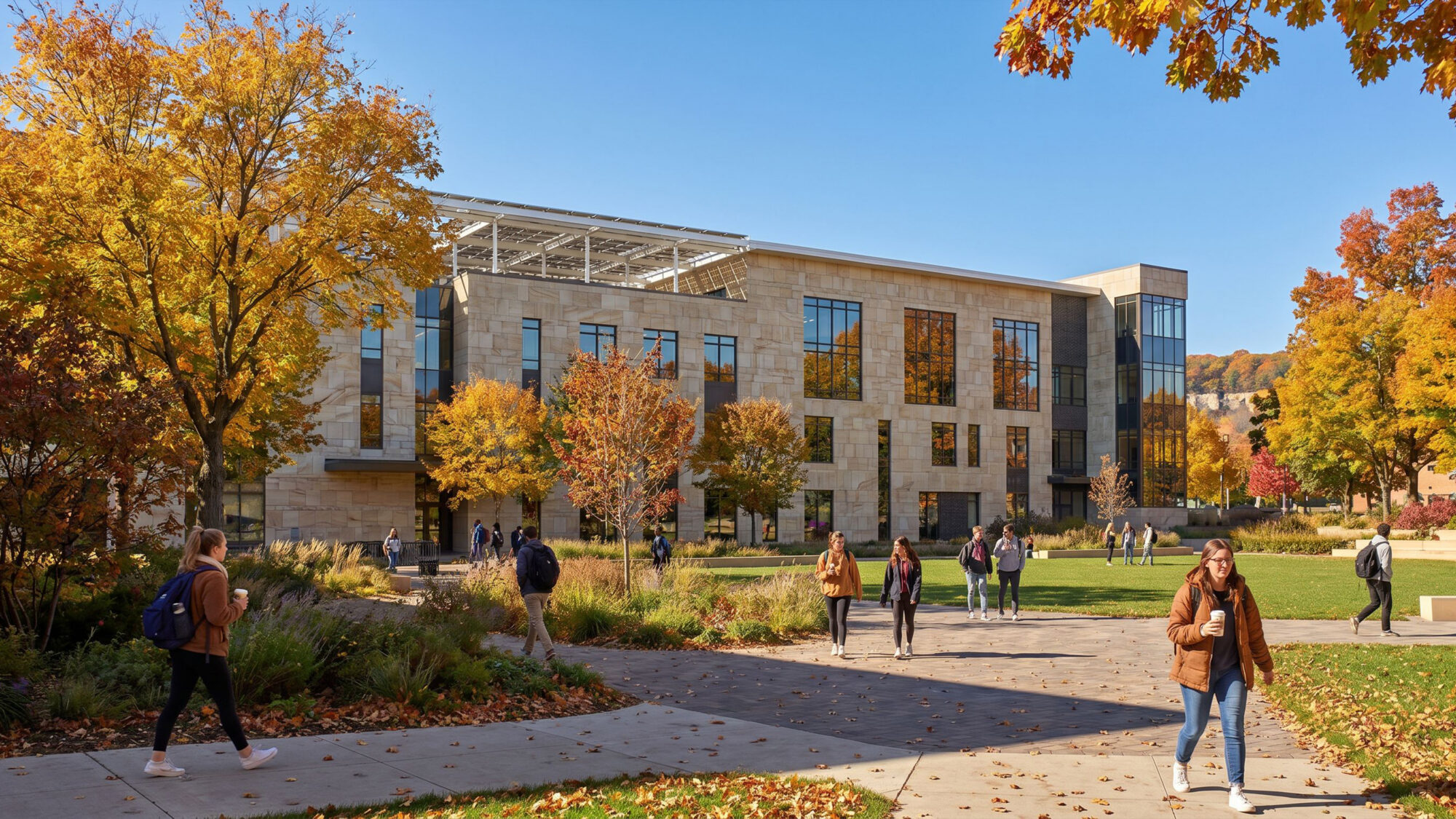
Consolidating the program also returns approximately one acre to native prairie, outdoor learning, and everyday campus life. A hybrid steel and mass timber structure reduces embodied carbon, while a high-performance solar roof advances the university’s net-zero energy goals. Together, building and landscape create a new gateway shaped by Winona’s bluffs—and by the university’s future.
Winona State University
Architecture, Regenerative Design, Sustainable Systems Integration, Community Engagement
Winona, Minnesota, USA
77,000 SF new construction & 1 acre reclaimed greenspace
In-Planning / Estimated Occupancy Before 2030
Upper Midwest – Prairie and Bluff Ecosystem
Concept & Parti
A Building that Connects
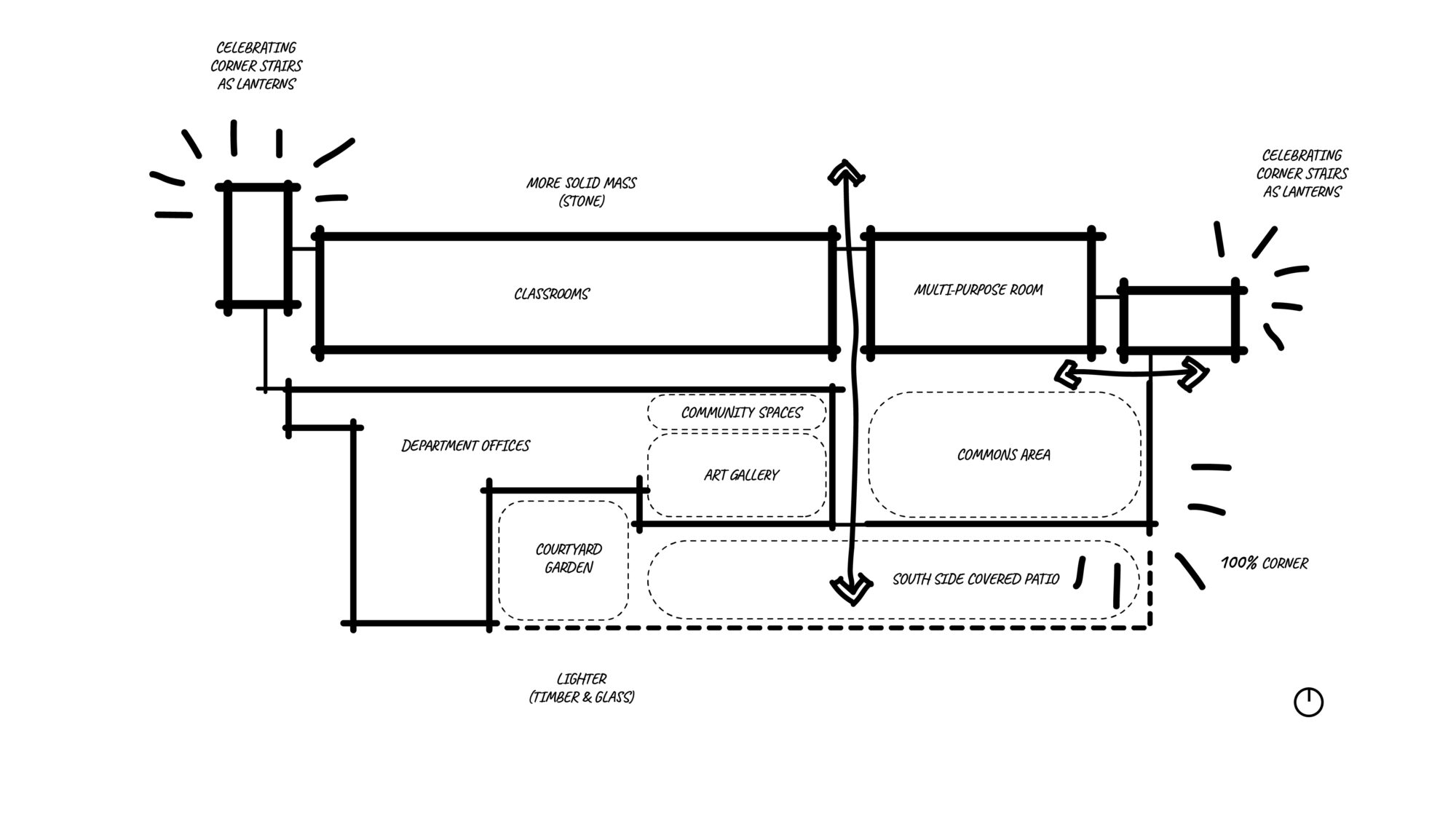
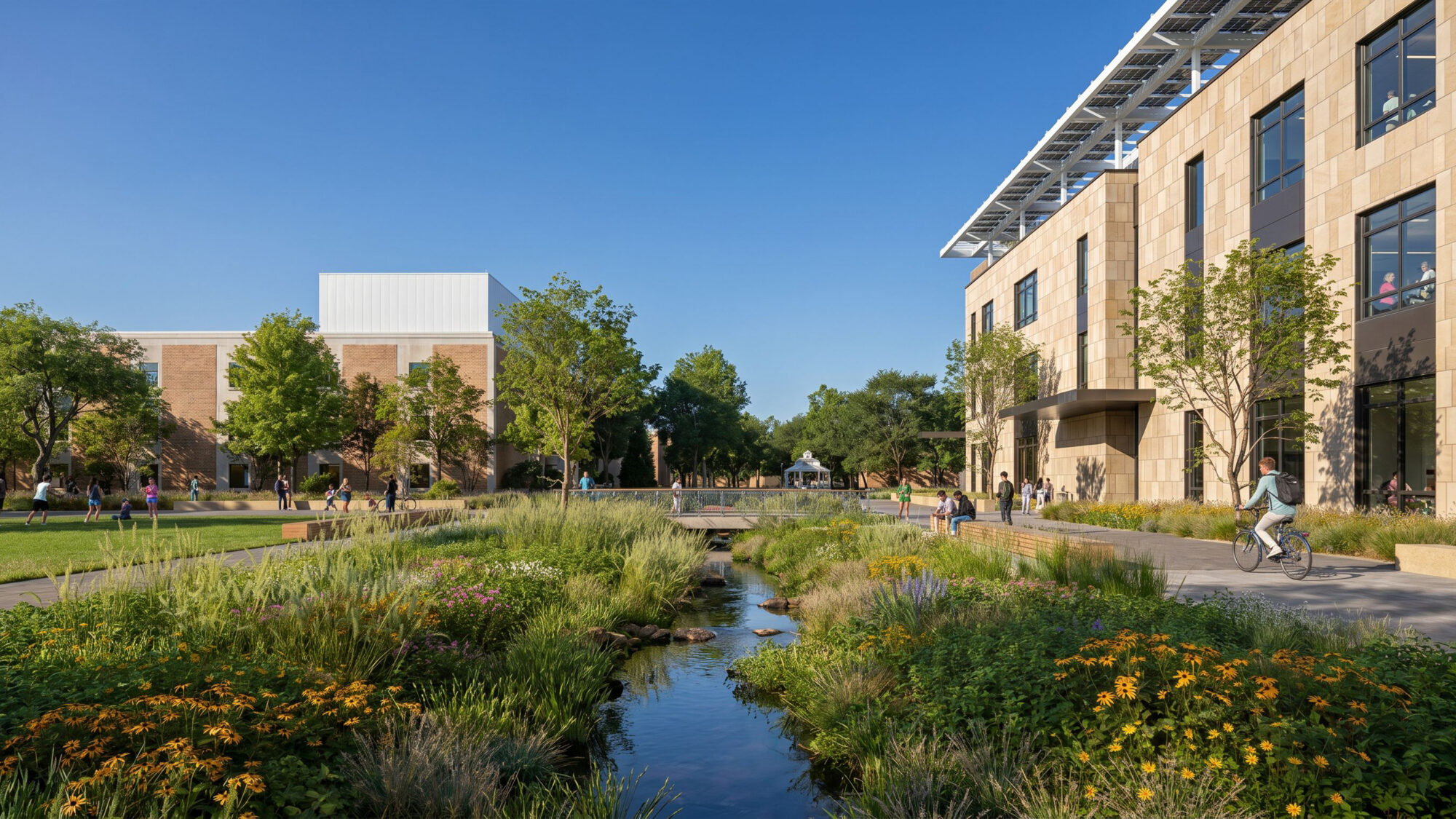
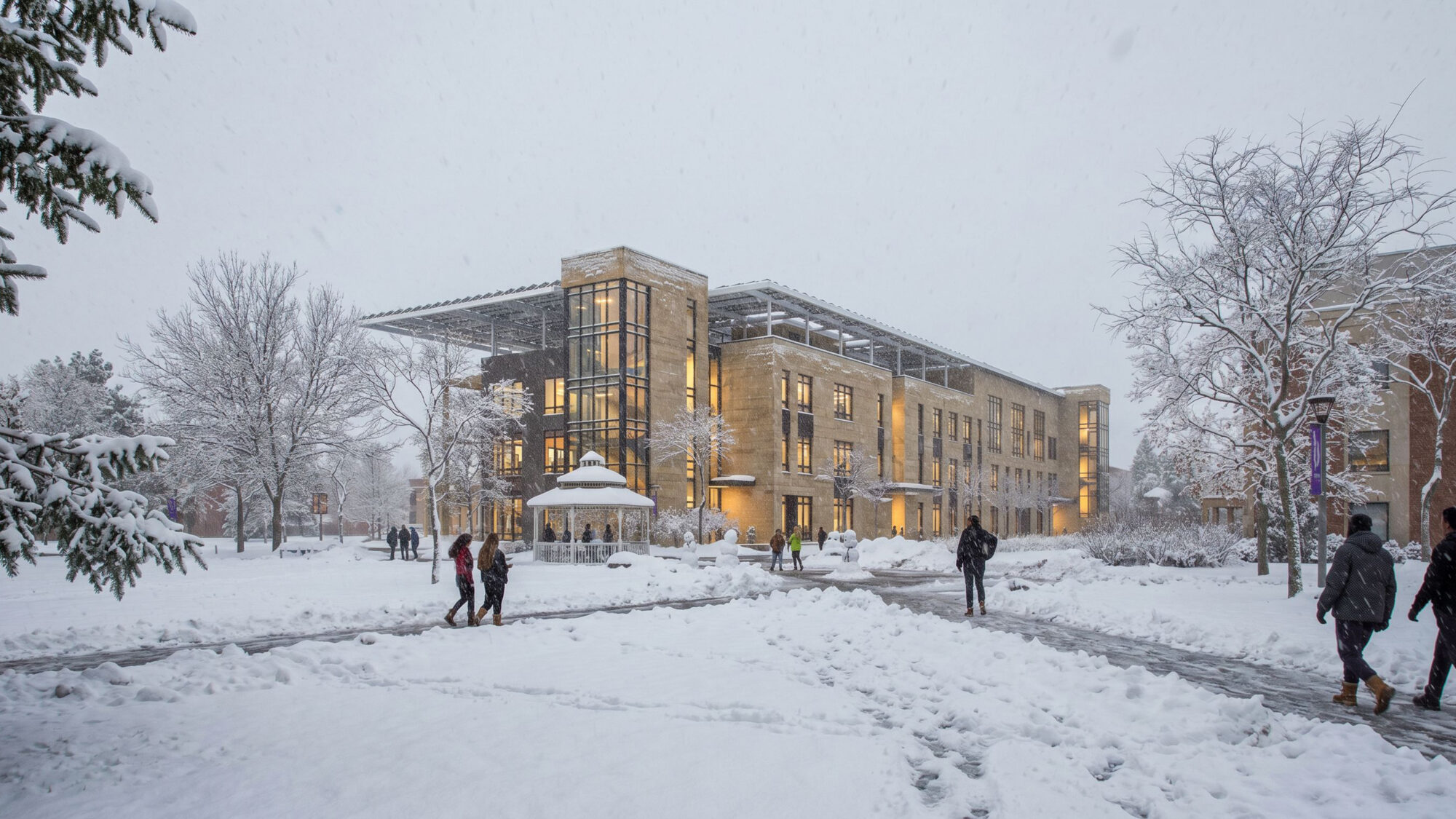
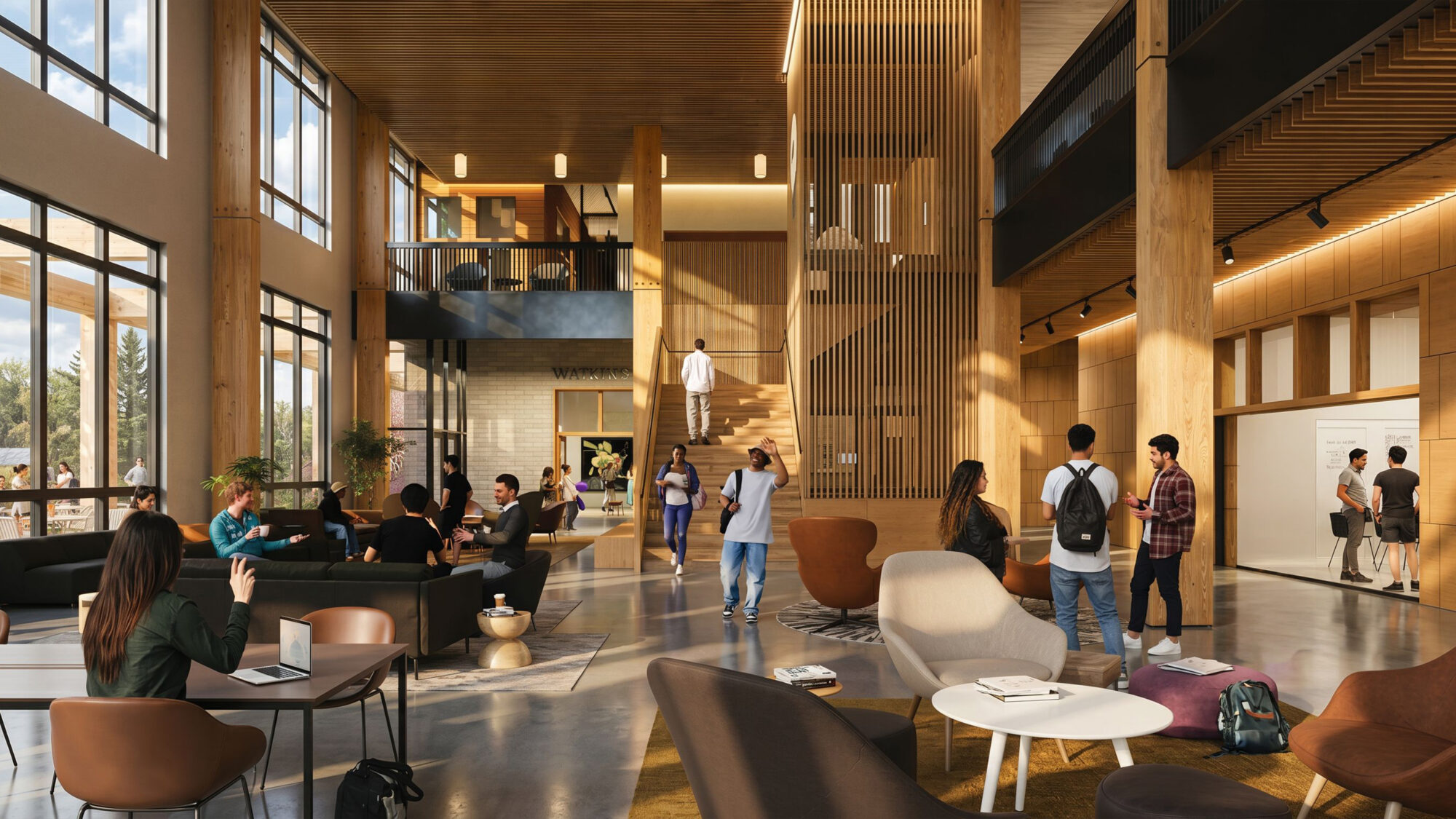
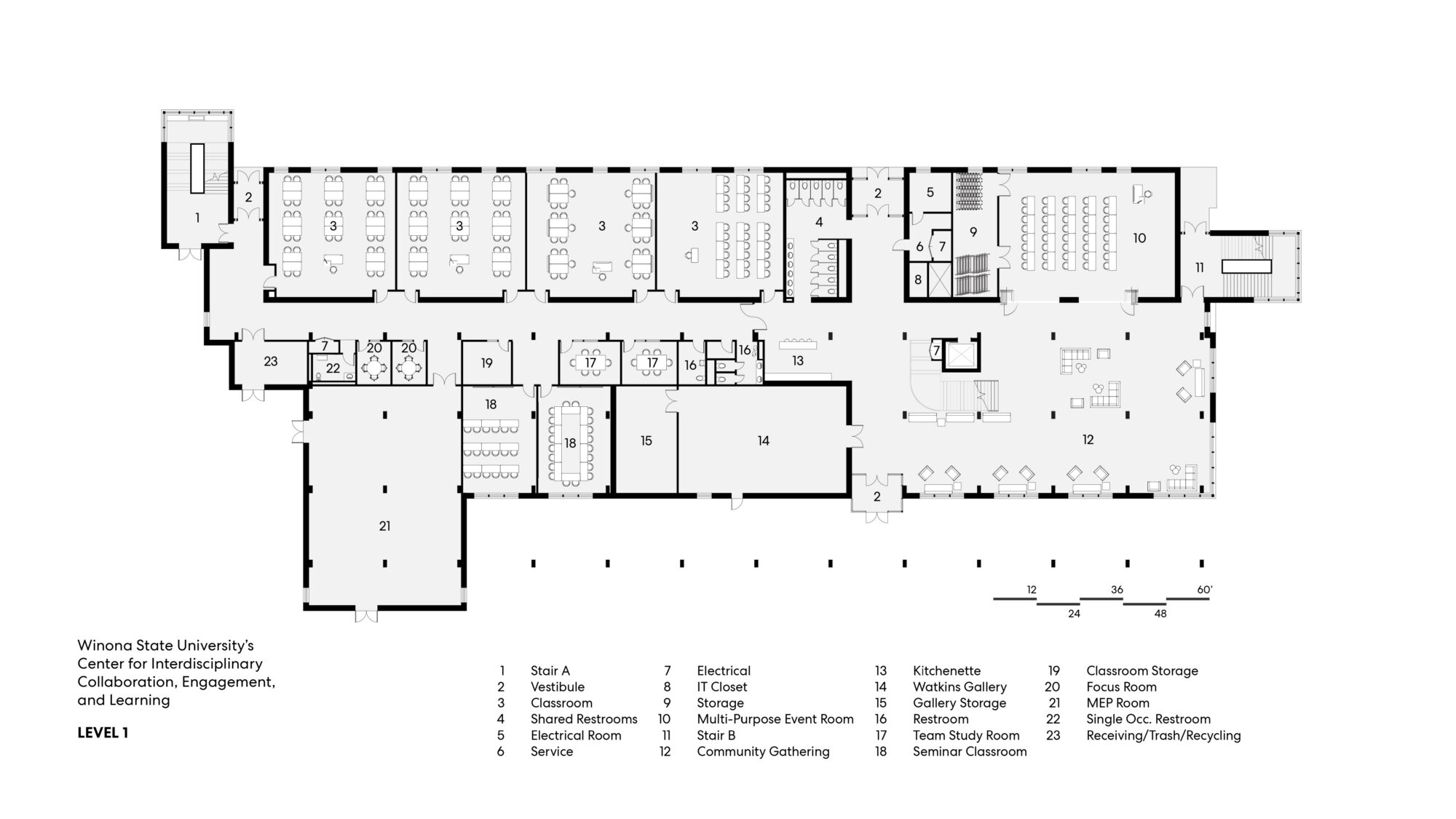
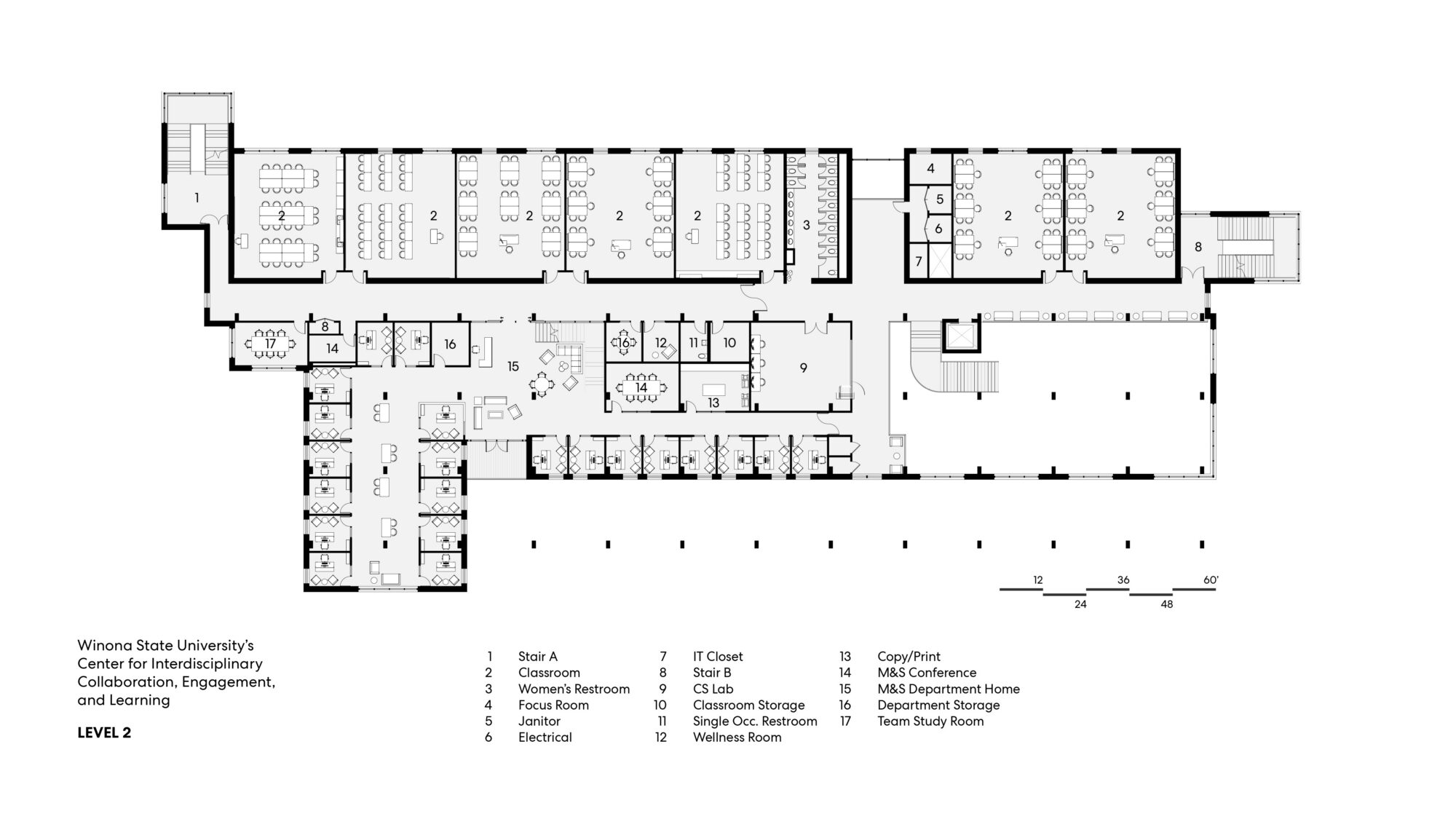
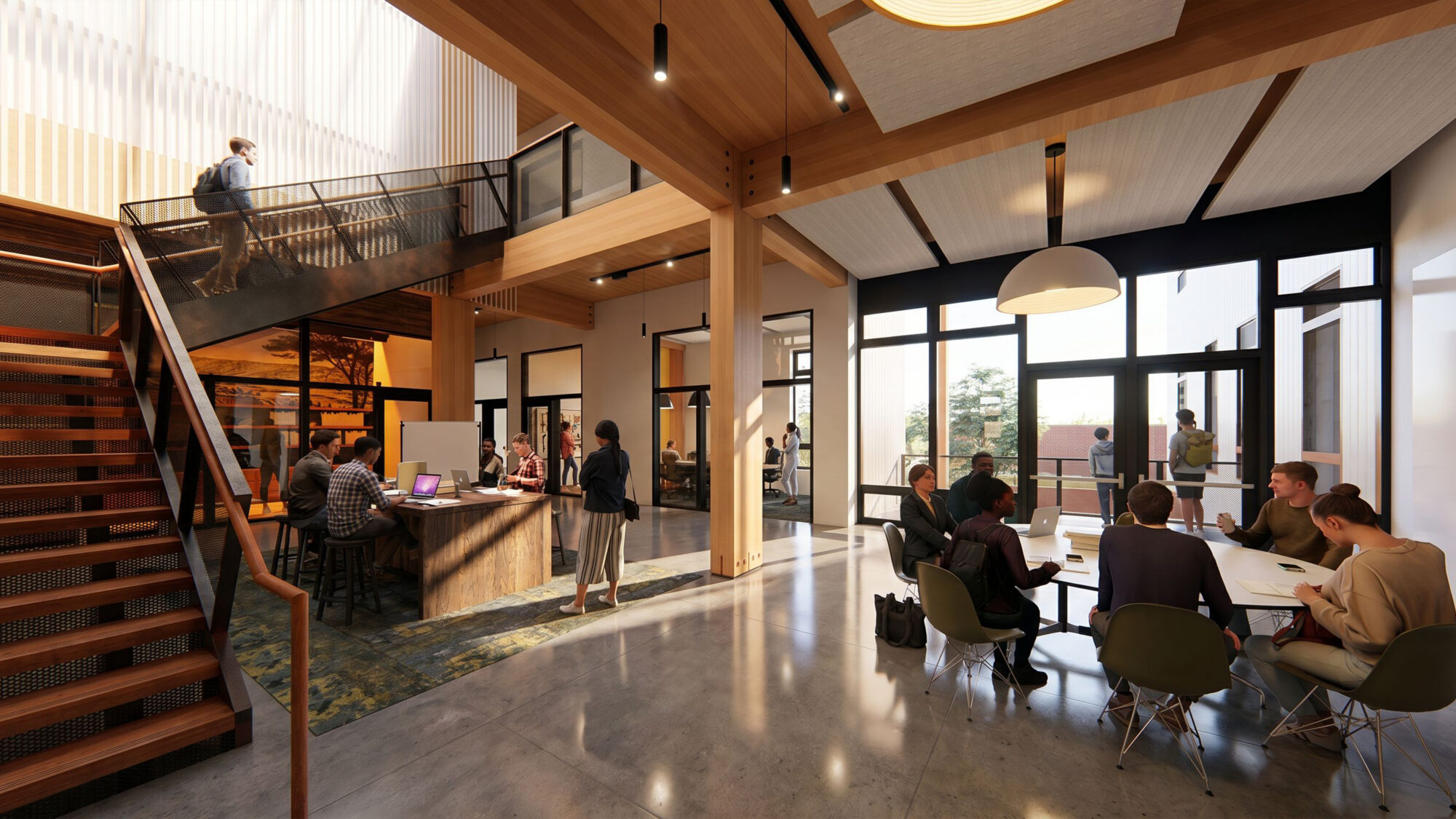
CICEL places classrooms along a limestone bar to the north, bringing in balanced daylight without glare. To the south, mass timber social spaces offer warmth, openness, and flexibility. A central corridor connects the two as the building’s shared spine. Solar, geothermal, low-carbon materials, and stormwater systems work together to support performance and well-being. The result is a clear framework for focused learning, collaboration, and campus life.

Inspiration and Context
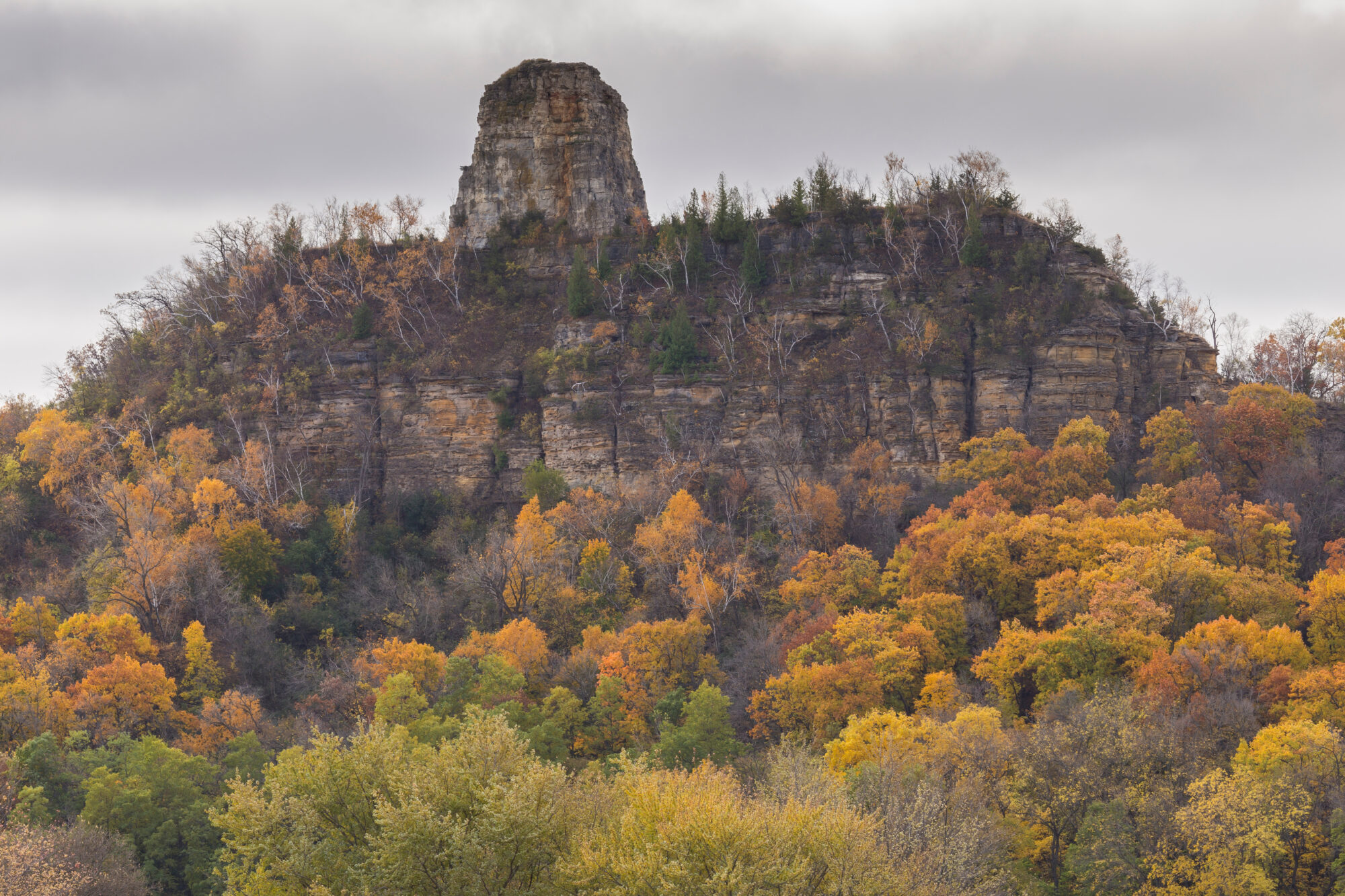
Framed by the 500-foot Sugar Loaf Bluff, CICEL translates Winona’s layered limestone geology into a grounded stone bar and warm, stacked mass timber spaces. The architecture connects the city’s defining landform with its legacy as a major 19th-century lumber center—shaping a contemporary academic building rooted in both place and memory.


CICEL activates the campus on every side: a south-facing porch extends learning outdoors, while a visible corner stair turns everyday movement into a new campus landmark. Designed to meet 100% of its annual energy demand through on-site solar, it supports the university’s long-term goals through lower operating costs, stronger campus connections, and a better everyday student experience.
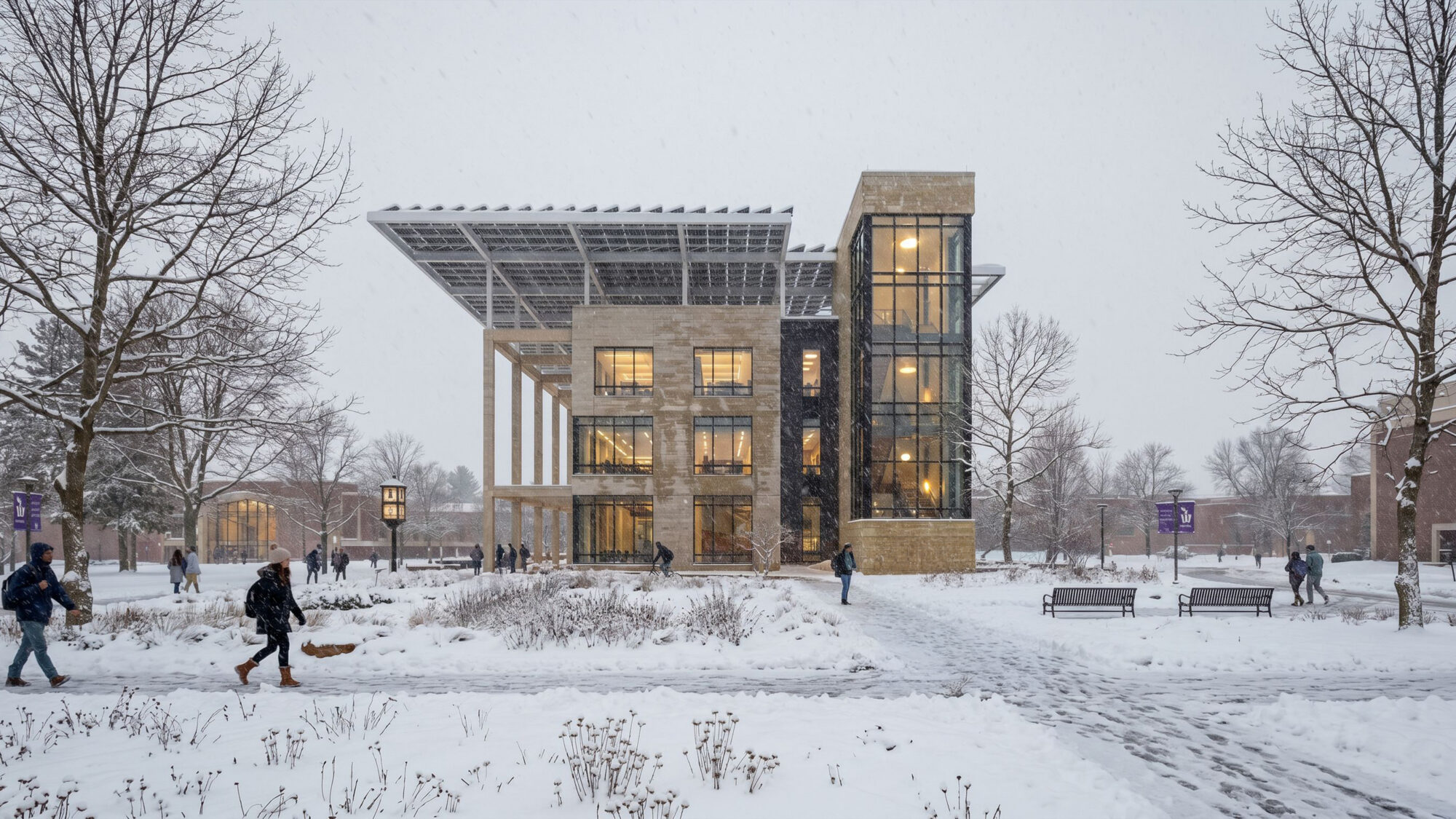

A more connected campus
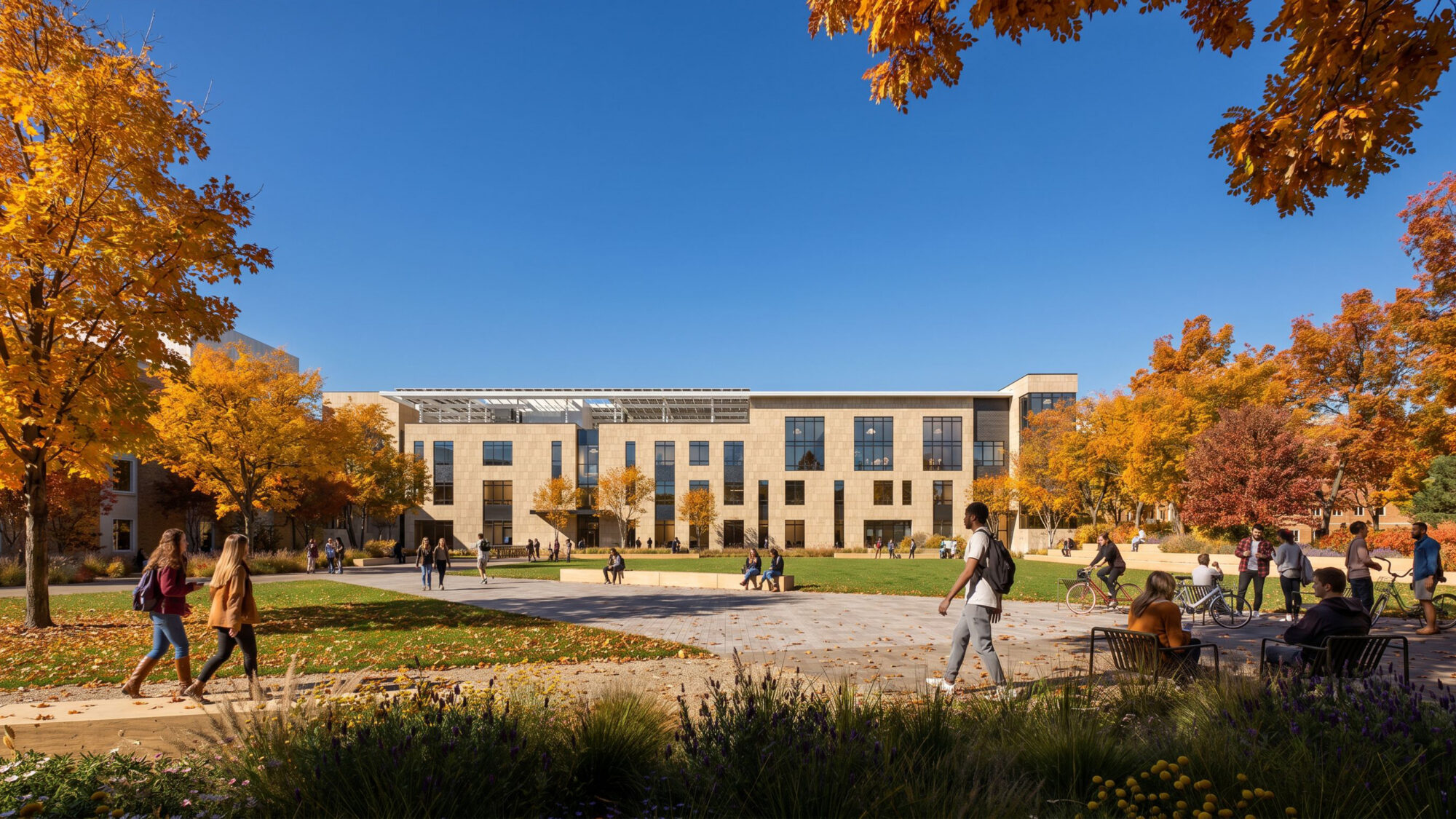
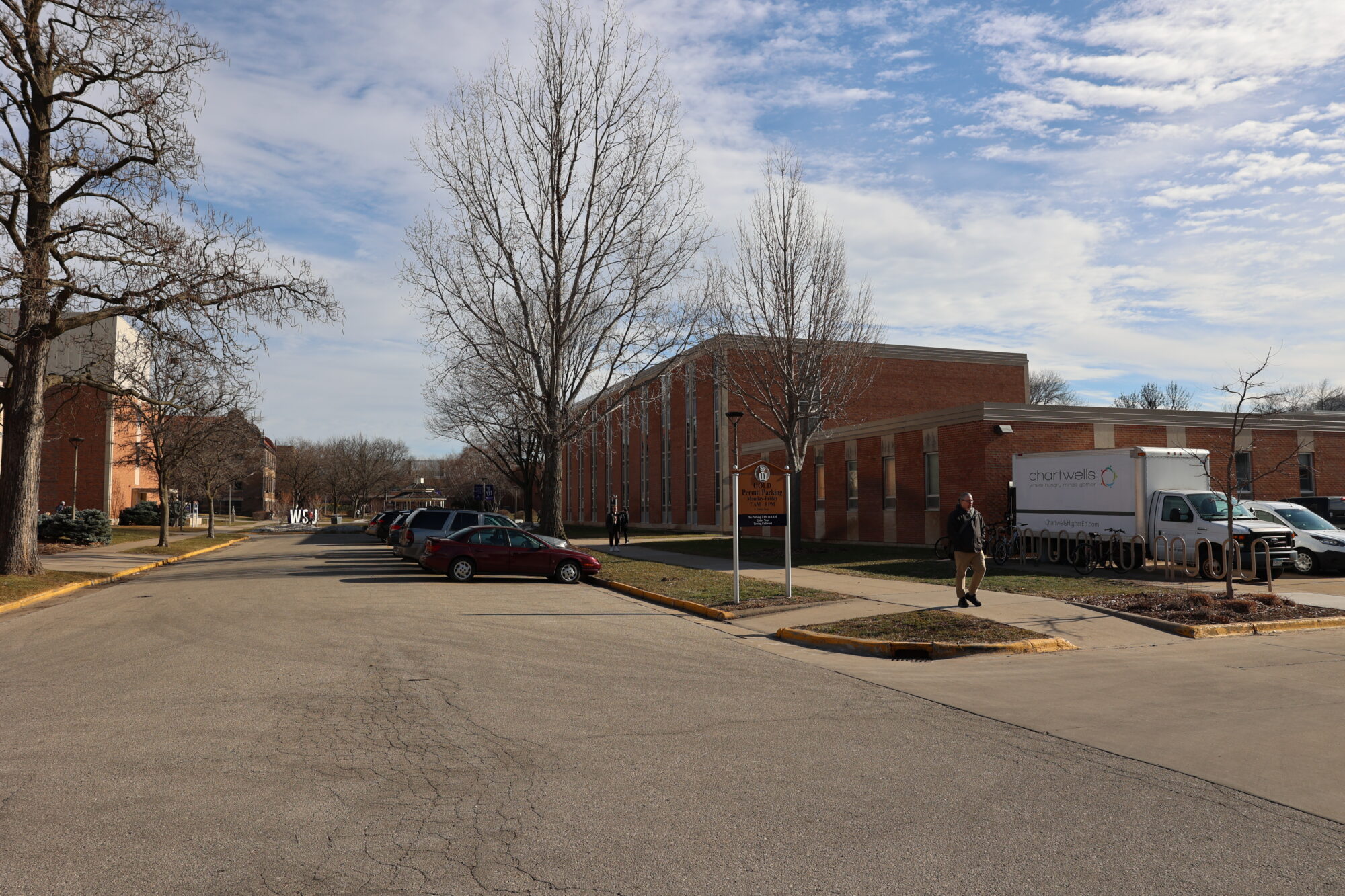
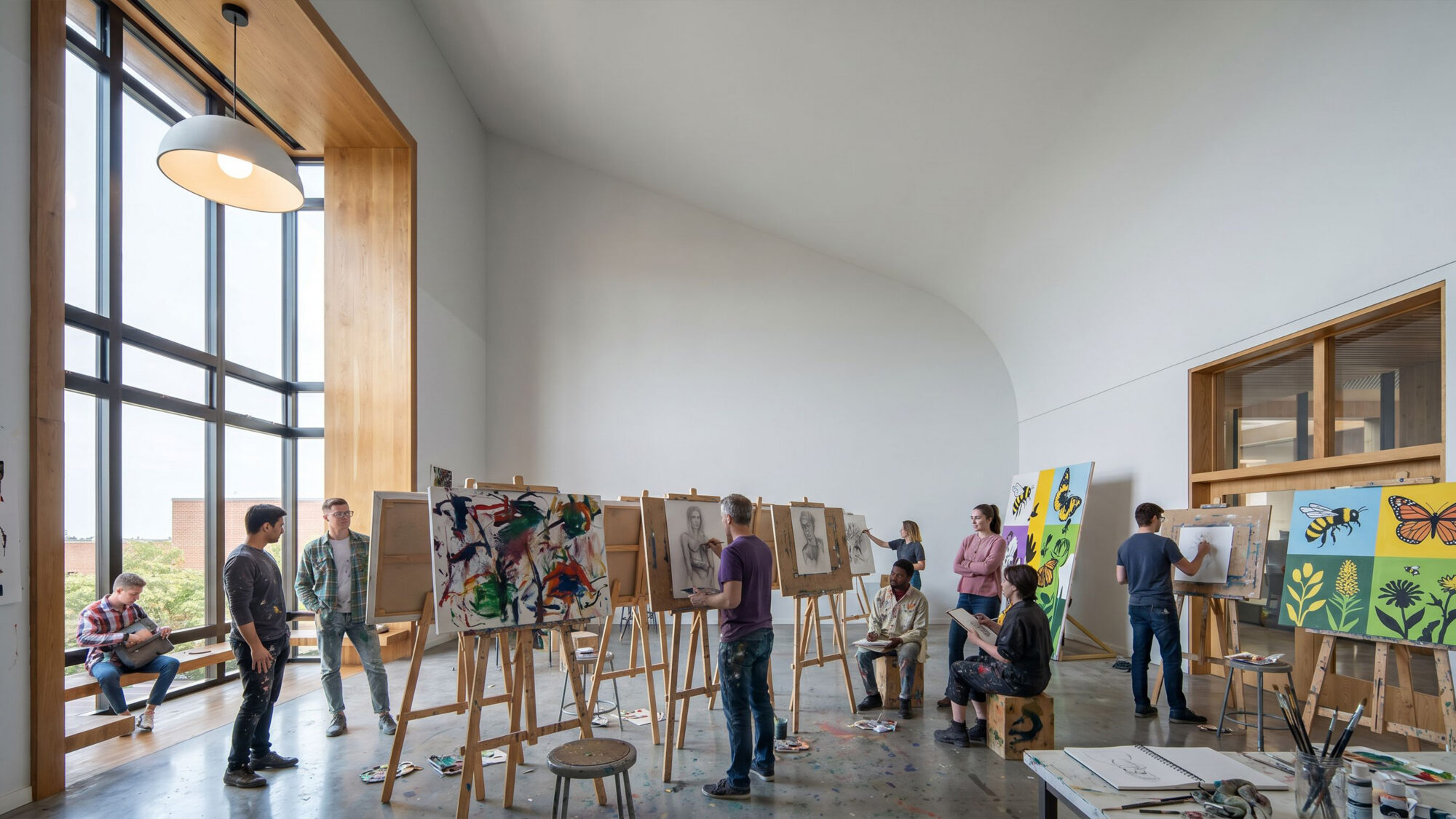
CICEL replaces two outdated buildings with one multidisciplinary hub for computer science, mathematics, art, and student services. Flexible spaces bring students and faculty together across programs. Consolidation also frees the former building sites for a new campus quad. Framed by landscape, the quad creates a clearer arrival and a more welcoming front door for the university.
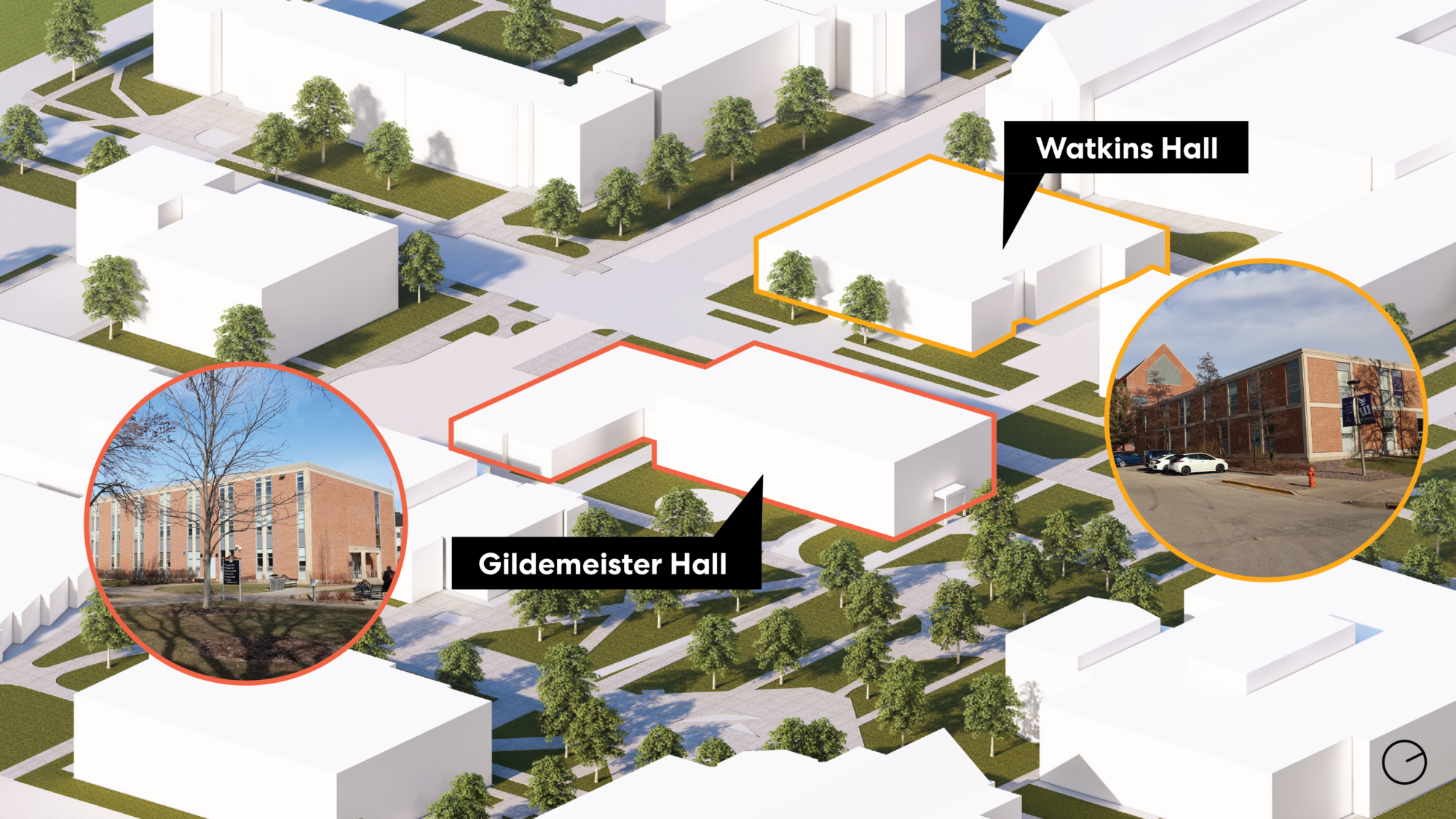
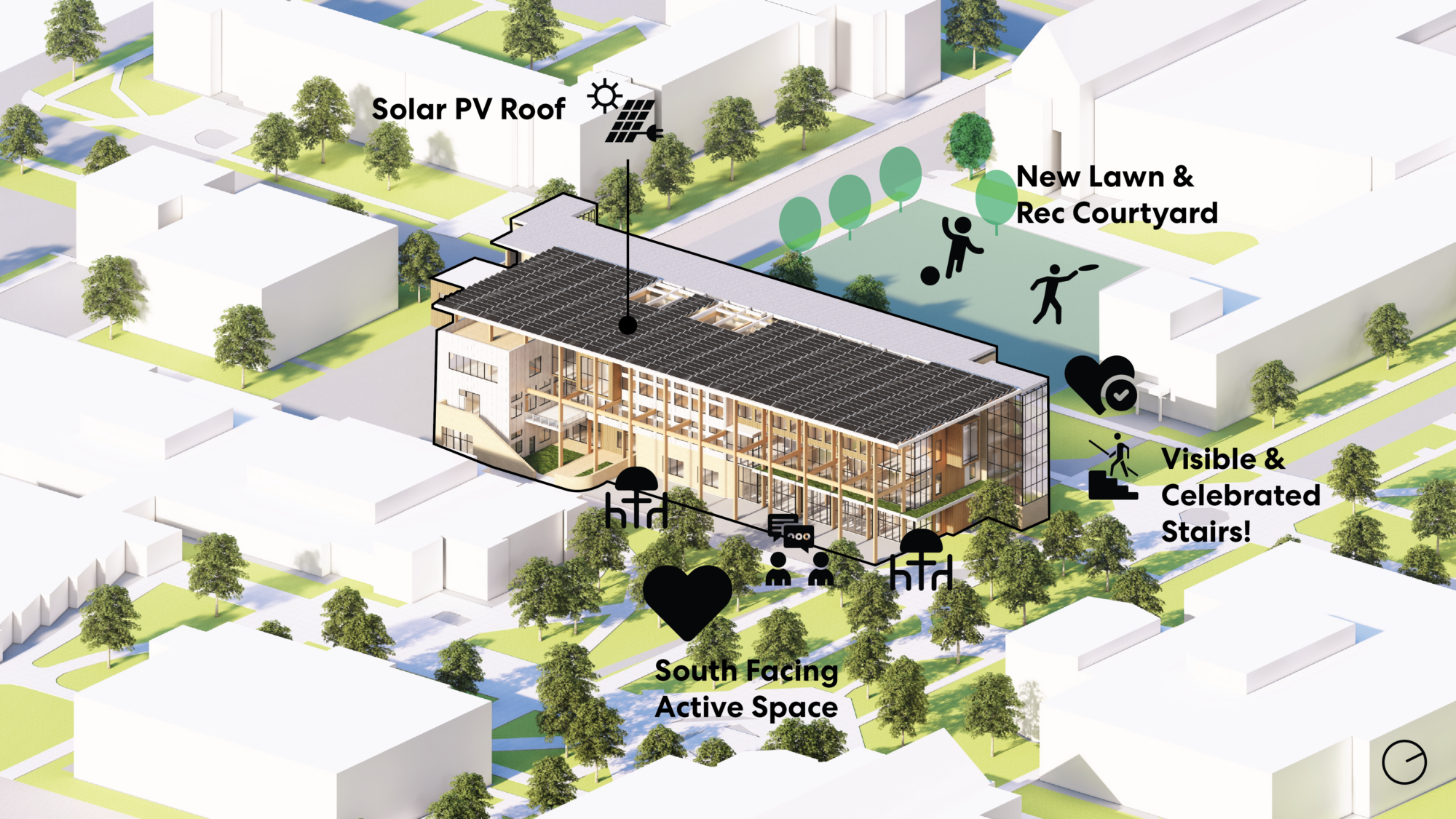
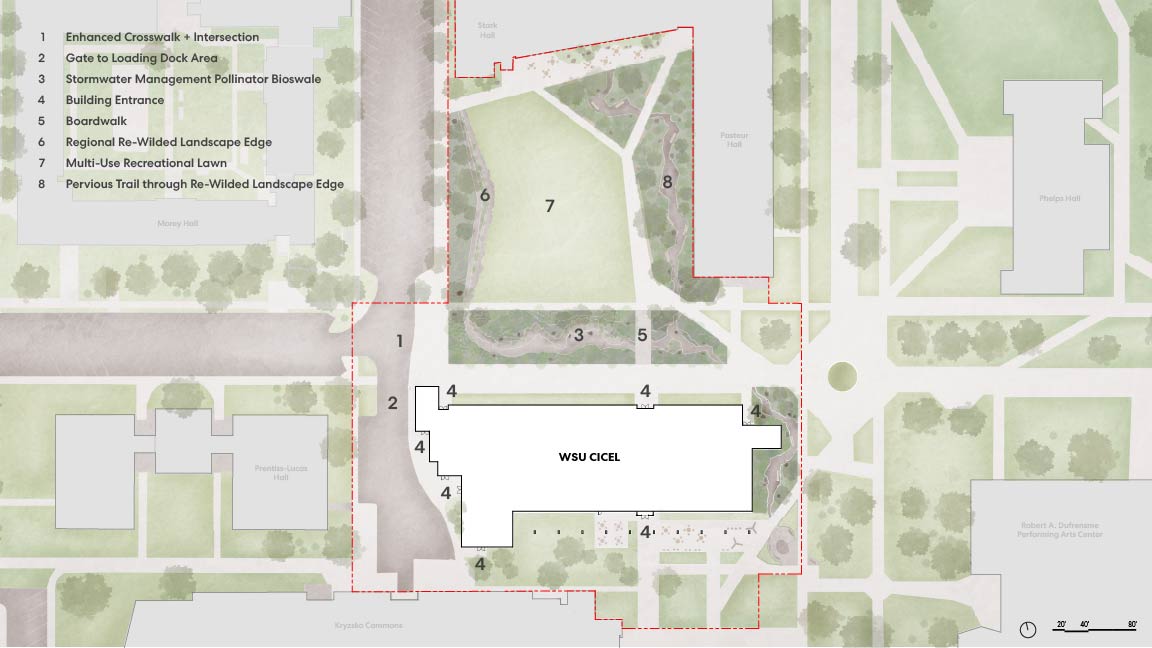
One acre returned to campus life.
CICEL replaces two outdated buildings with restored prairie, a shared campus lawn, and a walking trail. The reclaimed landscape becomes a living classroom and flexible setting for recreation, events, and everyday connection.
Learning from the landscape
By removing a street, CICEL gives a paved piece of campus back to people and nature. Native prairie, bioswales, and new tree canopy slow stormwater, restore habitat, and create a cooler, more comfortable campus.
A walking trail connects buildings through gardens and exposed geology. Lawns and a central courtyard make room for classes, events, recreation, and quiet moments outdoors. More than a setting for the building, the landscape becomes shared ground—a place to gather, explore, and understand Winona’s prairie and bluff ecology.

“CICEL is more than a new building on campus. It’s an opportunity for active-learning classrooms, high-tech studios and labs, and innovative spaces. This project improves WSU’s educational experience while furthering our commitment to sustainability and affordability.”
— Winona State University

Shaped by the rhythms of campus life
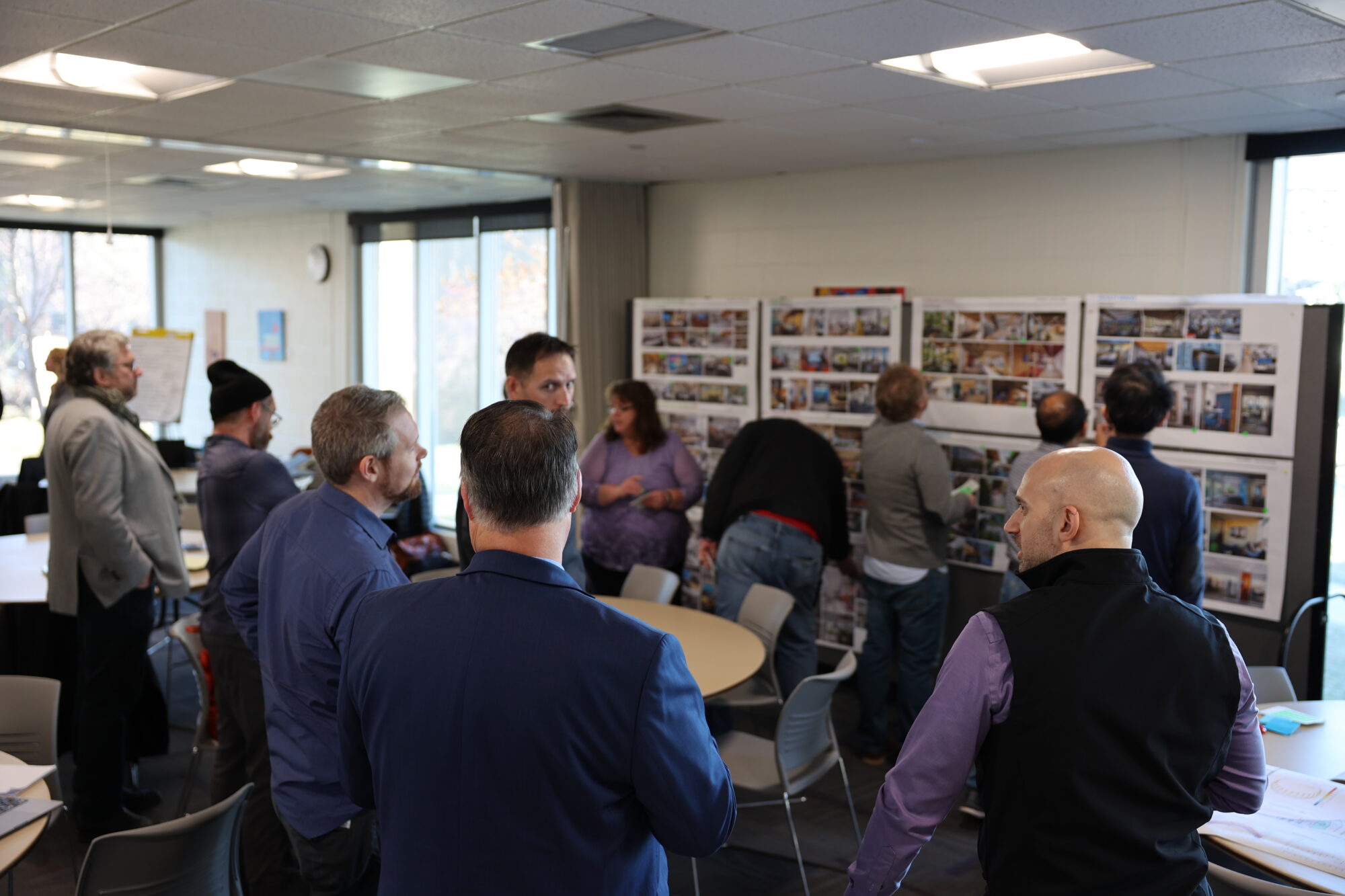
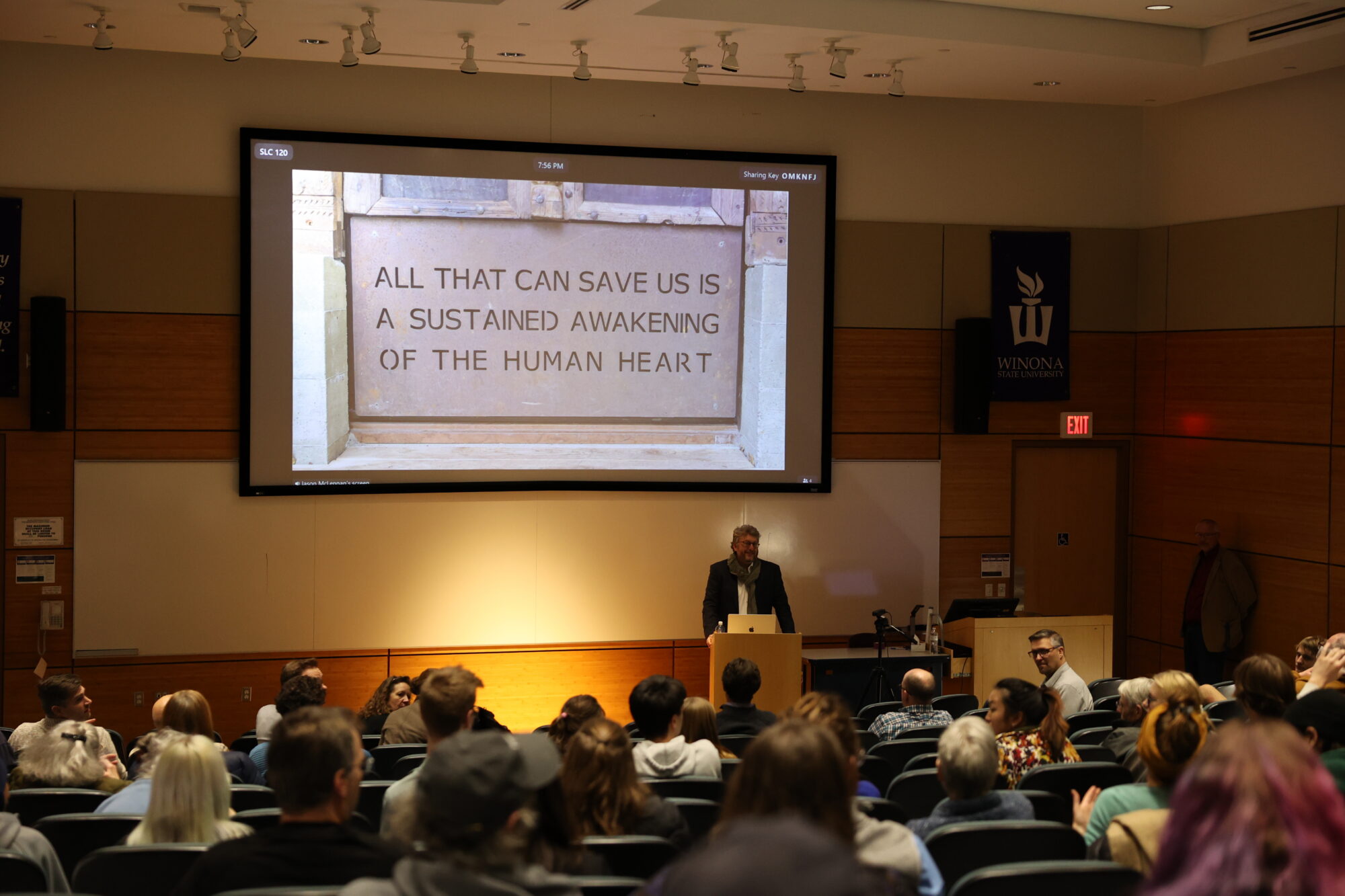
Students, faculty, and staff helped shape CICEL from the start. Design workshops explored how people teach, learn, move, gather, and recharge throughout the day. Their insights informed spaces that can shift naturally between focused study, active learning, and collaboration—flexible enough to evolve, but grounded in how campus life actually works.



“This project represents the future of learning at Winona State—bringing together disciplines, people, and place in an environment designed to foster collaboration, sustainability, and long-term value.”
— Winona State University Project Vision
Let’s shape what’s next for your campus.
The strongest campuses do more than accommodate growth. They connect people, programs, landscape, and long-term priorities around a shared vision.
Whether you are planning a new campus, renewing an existing building, or creating new spaces for learning, research, work, and community, we can help turn complexity into a clear path forward. Our approach is rooted in place, informed by evidence, and focused on lasting value.
Bring us your ambition. Together, we can create a campus where people—and ideas—thrive.


