

Work |
Henrico County Center for Environmental Studies and Sustainability
Henrico County, Virginia
America’s First LBC Public School Reimagines Learning in Virginia on Henrico County’s Historic Land.
Nestled within the 1,184-acre Wilton Farm along the James River, the Center for Environmental Studies and Sustainability (CESS) is a groundbreaking regenerative school and educational facility for Henrico County Public Schools — designed to be the world’s first K–12 Living Building Challenge-certified public school project. Developed as a collaboration between McLennan Design/Perkins&Will Bainbridge Island studio and the North Carolina Perkins&Will studio, CESS stands as a beacon of ecological education and regenerative design, demonstrating how public schools can lead innovation by integrating sustainable design for schools with community and place. This 11,000 SF regenerative facility supports the district’s environmental studies specialty program with flexible classrooms, prep spaces, a commons area, and administrative offices designed to foster interdisciplinary exploration across life sciences, environmental physics, biology, geospatial studies, and more.
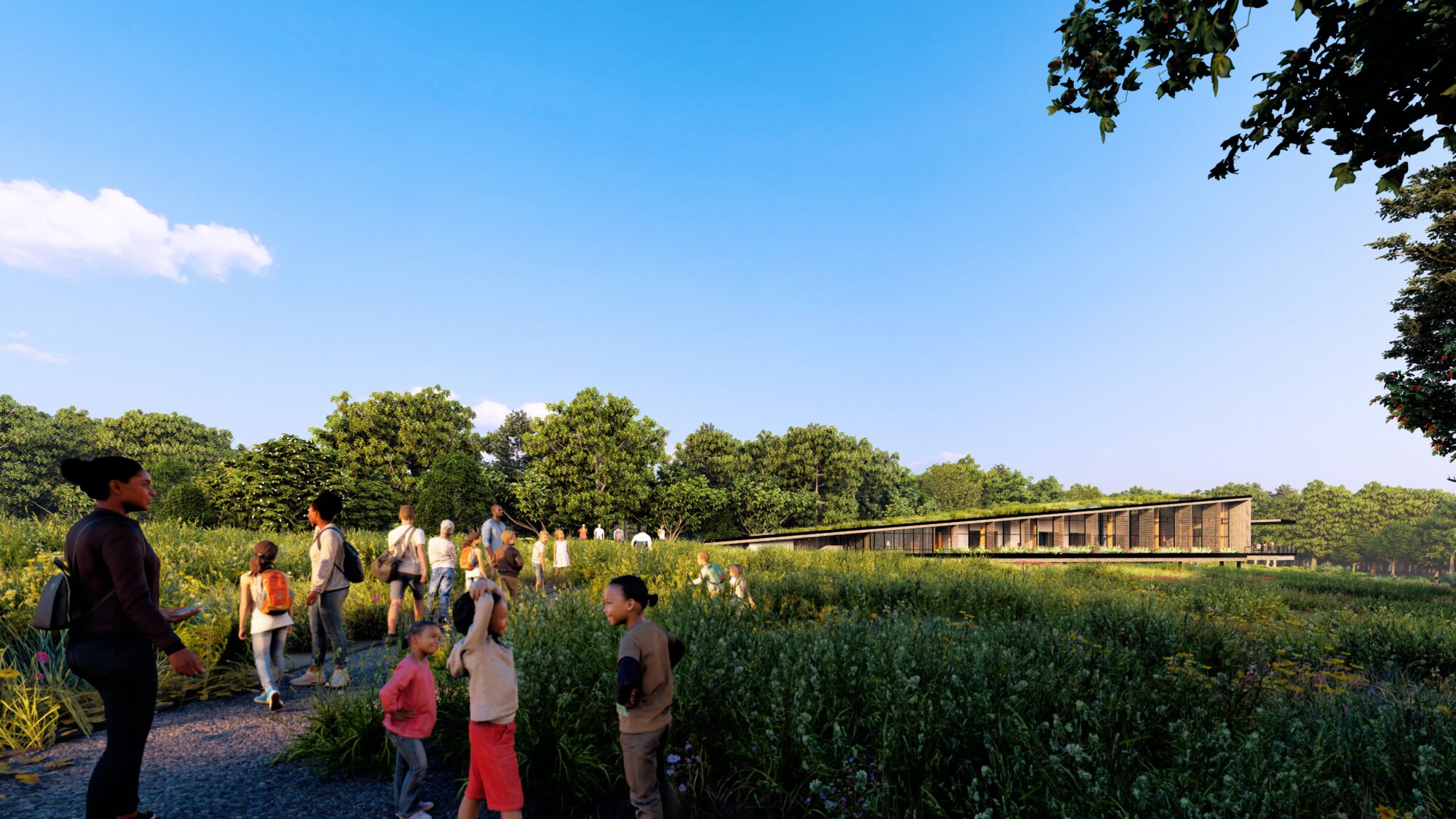
As both a high-performance learning environment and living teaching tool, the building operates as an integrated ecological system: solar panels generate over 105% of the energy the building consumes annually, while on-site captured rainwater—purified for drinking, cooking, and restrooms—reduces building water use by 90%. Construction uses repurposed materials and generates minimal landfill waste. Surrounded by wetlands, forests, a lake, a creek, a pollinator garden, and native landscaping, students learn not just in nature, but with nature—engaging in activities from water quality testing and renewable energy monitoring to hiking, photography, and canoeing.
More than a school building, CESS embodies environmental stewardship, community connection, and place-based education—offering an adaptable, affordable model of sustainable design for schools that inspires a healthier, more sustainable future for people and place alike.
A collaboration between Perkins&Will | Bainbridge Island & Perkins&Will North Carolina Studio
Henrico County Public School District
Lead Architect
Pursuing LBC
Henrico County, Virginia
11,500
Estimated 2026
Level III - Southeastern Plains
Educational, Environmental Learning Center

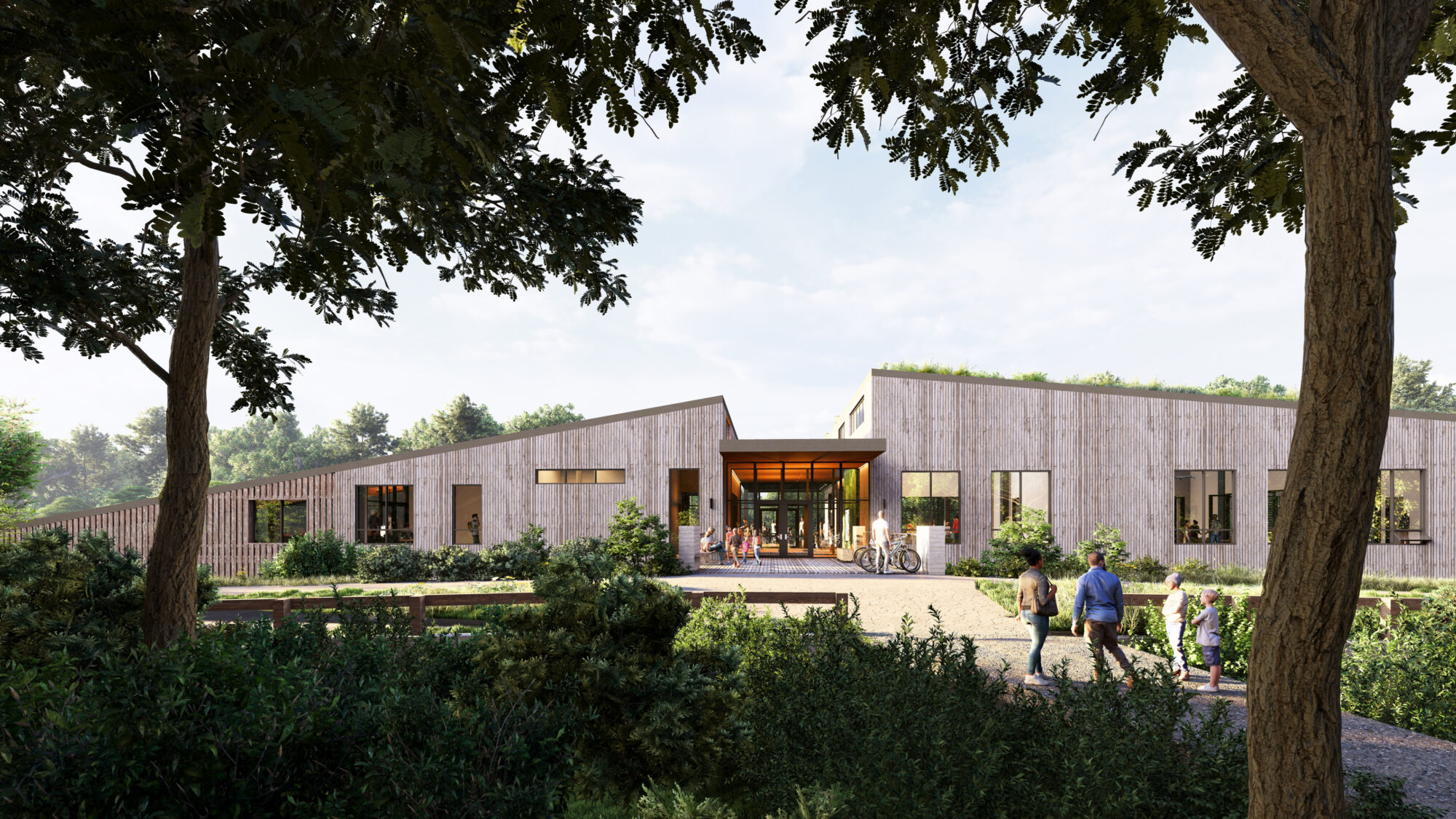
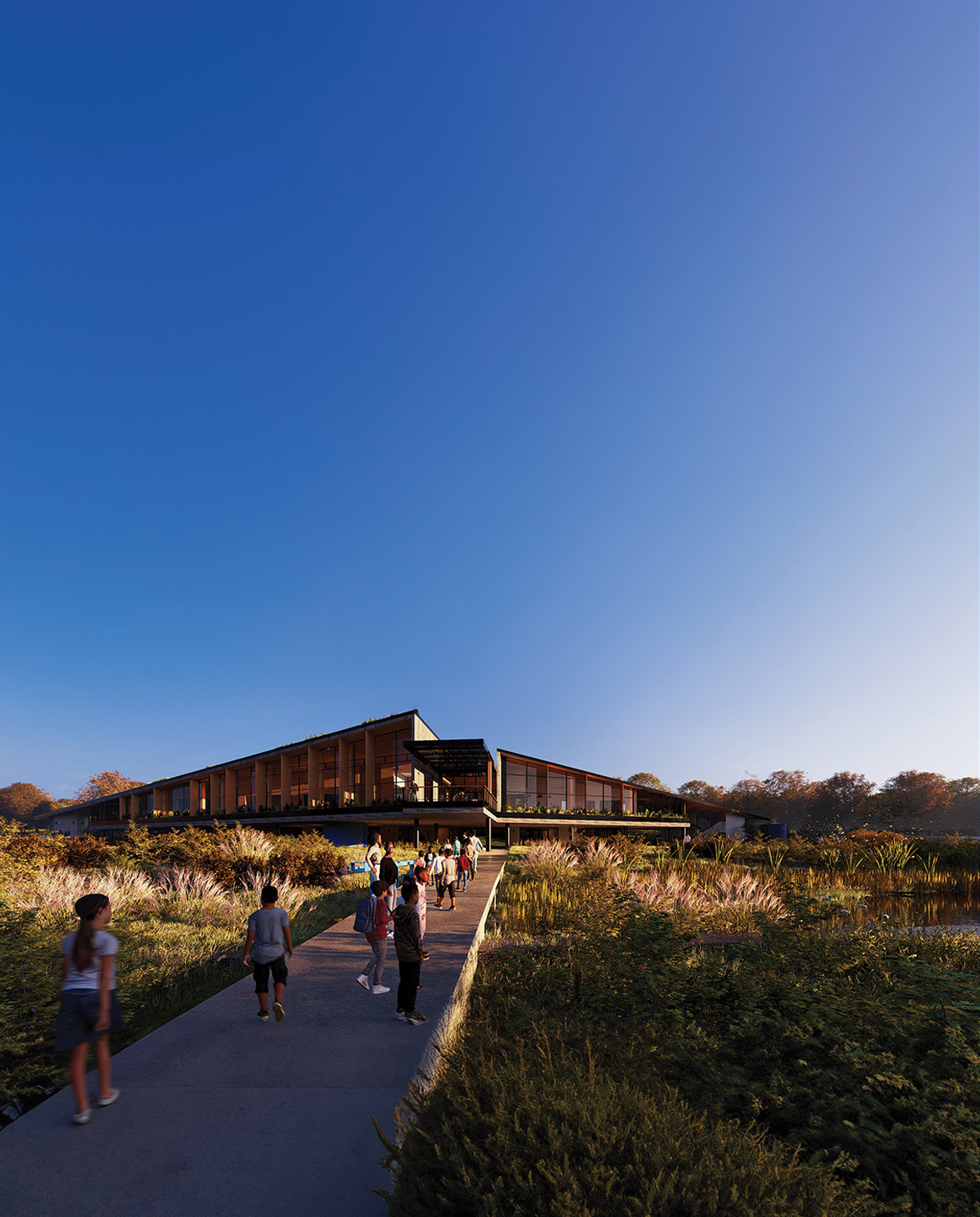
The architectural parti draws from the regional dogtrot, organizing the building into two clear wings—one for administration, the other for learning and events—connected by an open breezeway. This simple move enhances clarity and wayfinding for K–12 students, maintains strong visual connections to the landscape, and reflects biophilic principles like prospect and refuge. The layout also supports passive supervision, giving administrators clear sightlines across learning spaces while ensuring a secure, welcoming environment.
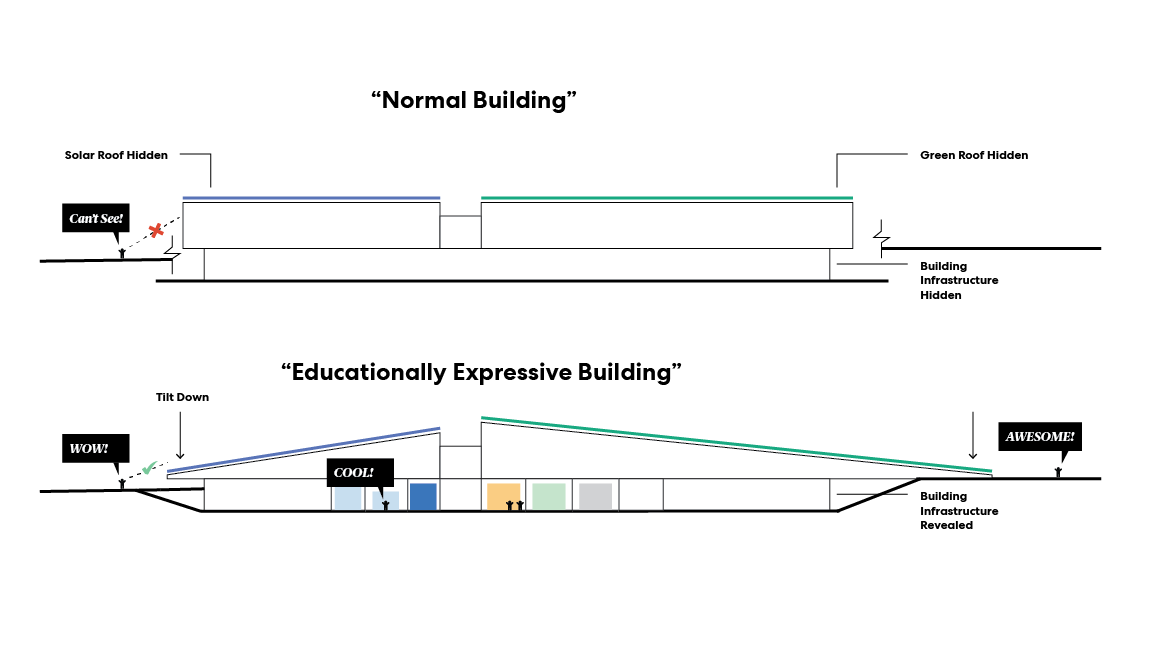
An Educationally Expressive Sustainable School Building
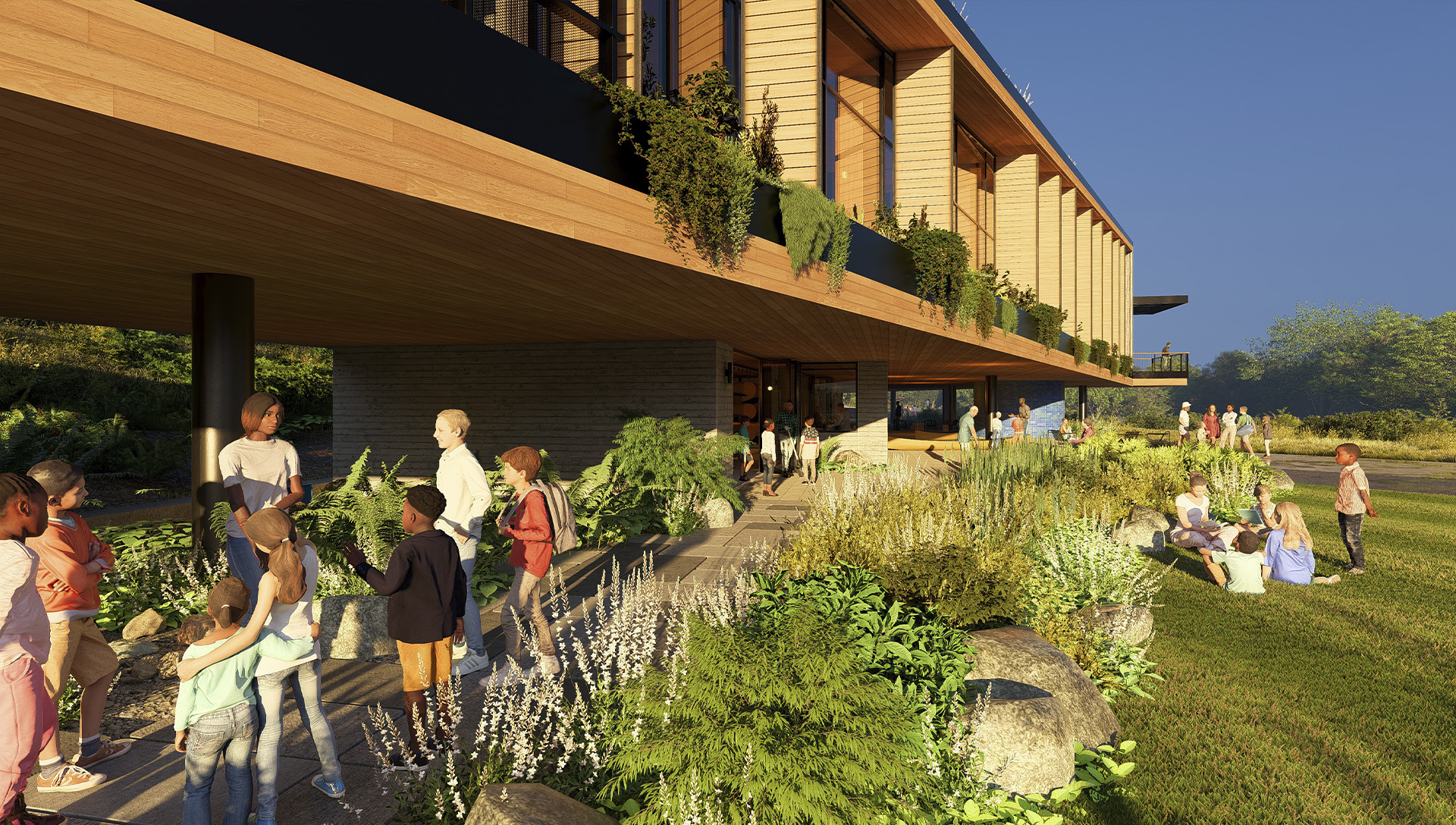
Angled in response to the 500-year floodplain and oriented to panoramic views of Whale Lake, the building’s form becomes a teaching tool. Tilted rooflines reveal a green roof on one wing, solar panels and rainwater systems on the other—making infrastructure visible and legible. Elevated to preserve farmland, the structure also creates a shaded, multi-use space below. Every architectural decision supports learning, wayfinding, and biophilic principles—offering a secure, expressive environment where K–12 students experience sustainability not just as curriculum, but as part of daily life.
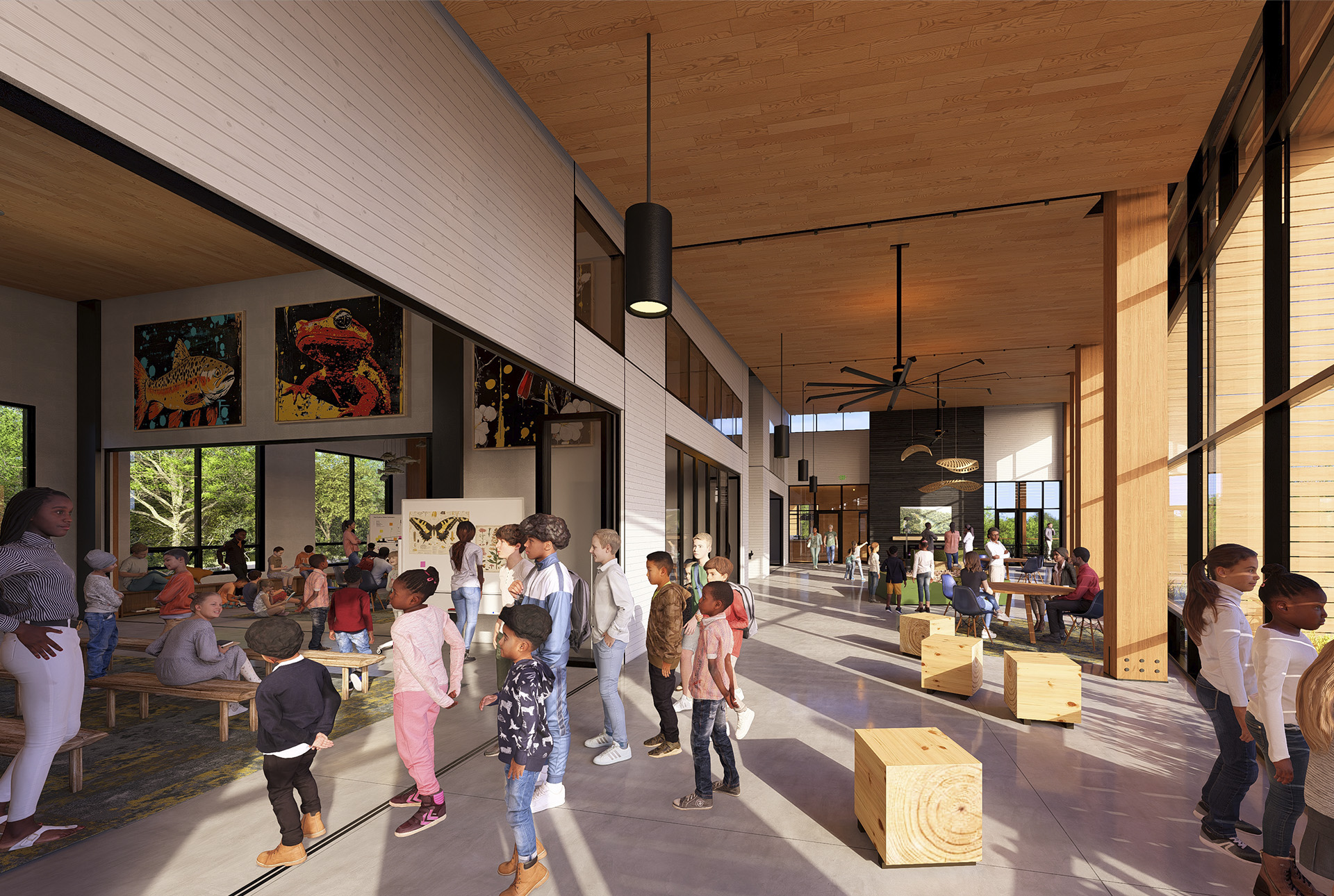
Learning in Place: Honest Materials, Flexible Spaces, and a Building That Teaches
Inside, four adaptable classrooms, prep spaces, a commons, and a modest administrative suite create a flexible, welcoming environment for students and educators alike. The building is open and honest in its expression—revealing its timber structure and inviting the landscape in through a panoramic wall of glass that overlooks the restored prairie, southeastern pine forest, and Whale Lake.
More than a functional facility, this is a living classroom—where the architecture itself teaches. Materials matter: interior walls are clad in salvaged wood gym flooring, rich with patina and memory, giving the space warmth, texture, and story. Designed for durability and rooted in place, the building demonstrates careful stewardship of land, water, energy, and materials. It relies entirely on water and energy captured on-site, with construction practices that minimize waste and leave a regenerative footprint.
Targeting Living Building Challenge certification, every inch of this place reinforces sustainability not as a concept, but as a lived, daily experience—for learners of all ages.

Site placement
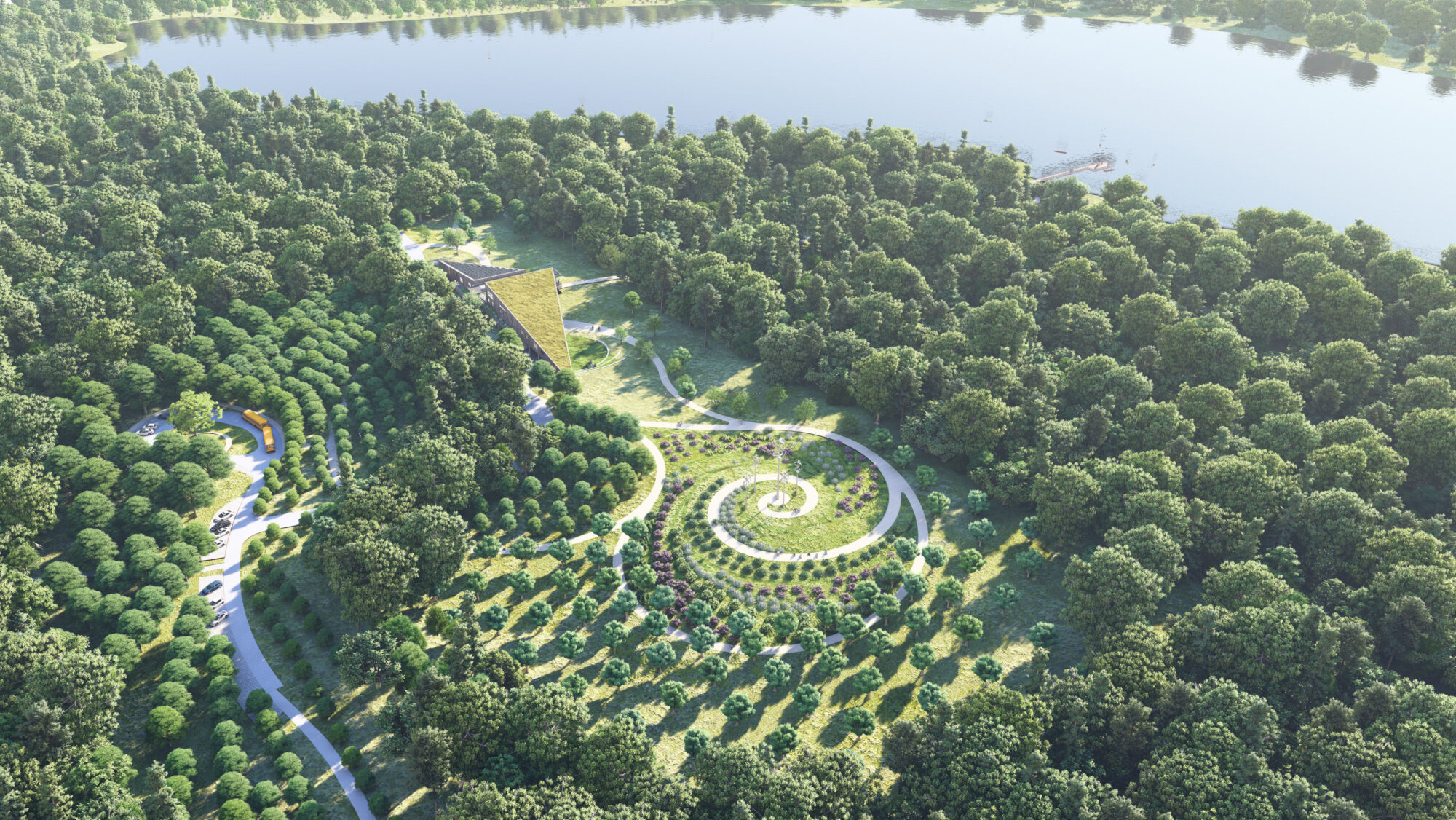
The design team worked closely with biologists and ecologists to understand the land’s ecological rhythms and site health, selecting a location that minimized disruption to sensitive habitats. Nestled carefully into the existing canopy and topography, the building honors the landscape’s natural systems—protecting, preserving, and learning from them.

Where Systems Teach: A Ground Floor Built for Discovery, Resilience, and Sustainable Design for Schools
The ground level of the Center for Environmental Science and Sustainability embodies sustainable design for schools—where systems don’t hide, they teach. Students can see how water is captured, filtered, and reused through transparent access to the building’s HVAC and water treatment rooms, designed as visible, educational spaces. A gear room supports outdoor exploration, while a large covered patio allows for year-round programming. During storms, water flows beneath the building into a drip irrigation field, constructed wetland, and stormwater pond—turning the landscape into both beauty and a living lab for understanding natural systems.
“I firmly believe that it could be one of our HCPS students that save this world because they’ve come through this project and had this opportunity. And I’m so grateful – and there are thousands that will be grateful – for the work that you and your team and Henrico County Public Schools remain invested in, and that is innovation.”
-Alicia S. Atkins, Henrico County School Board, Varina District

“This is obviously amazing – I wish that I could live here. This is just a testament to the commitment of HCPS to wanting to truly express our commitment to sustainability. I think the building is a beacon of what public spaces and what public buildings not only could be but should be.”
-Mr. Madison T. Irving – Henrico County School Board, Three Chopt District

Henrico at TedxYouth@RVA
Alicia Atkins shares a powerful vision of how the Henrico County sustainable school building can heal and reconnect us—with nature, history, and each other. Rooted in deep place and community, this Living Building Challenge project embodies sustainability, equity, and hope, showing how thoughtful architecture can inspire positive change for students and the environment alike.
How a Living Building Honors the Past and Inspires the Future | Alicia Atkins | TEDxYouth@RVA


