Work |
Antioch College Village
Yellow Springs, OH, USA
How can we create housing that balances affordability, sustainability, and vibrant community life, while preserving privacy, buildability, and ecological health through missing-middle design?
A pioneering co-housing neighborhood designed to strengthen community connection, expand equitable housing options, and demonstrate a regenerative, small-town model for the Midwest. Rooted in Living Building Challenge principles, the project blends attainable homes, shared facilities, and ecological design strategies to cultivate a resilient, people-centered village.
Antioch College
Masterplanning, Architectural Design, Community Engagement
Targeting Living Building Challenge Petal Certification
Yellow Springs, OH, USA
67,976 SF
Masterplanning Completed But Project No Longer Going Forward
Eastern Deciduous Forest Region (Ohio Valley)
Residential, Mixed-Use, Co-Housing

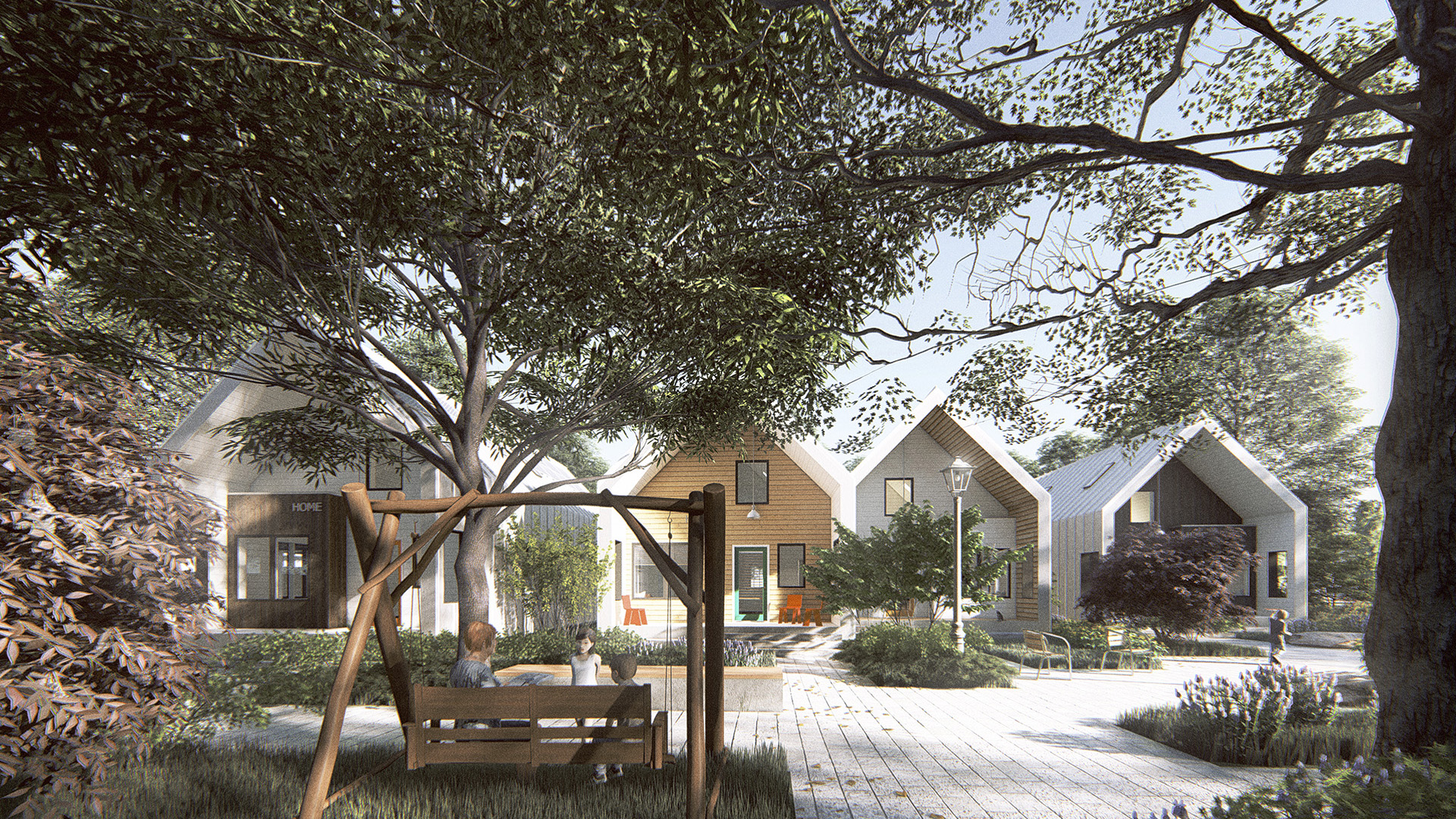
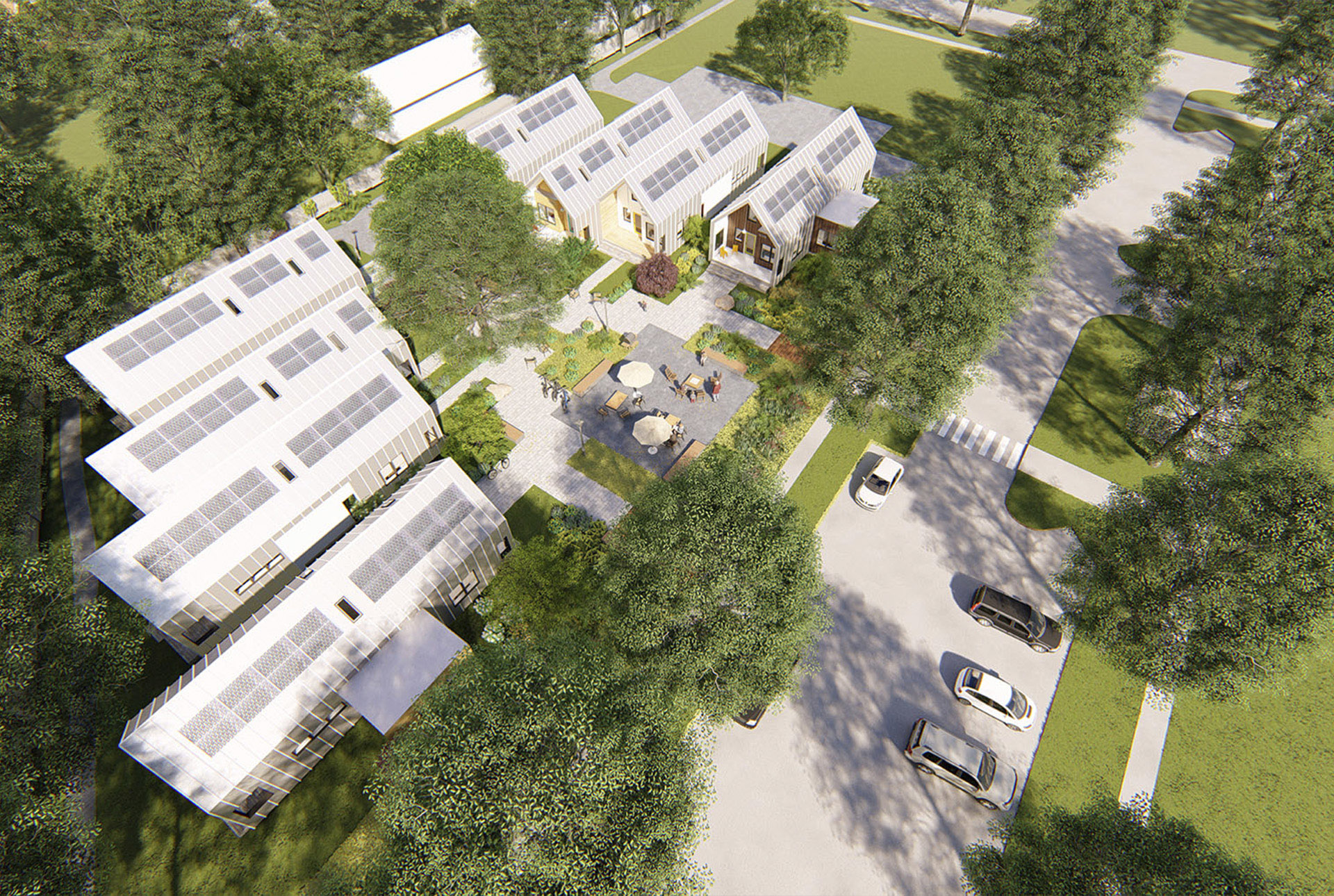
Antioch College Village Duplexs
What Makes It Cool
A neighborhood where community, sustainability, and resilience thrive in every home and shared space.
Antioch College Village Cohousing brings together modular, flexible homes and a shared common house to foster community, equity, and resilience. Designed with Living Building Challenge principles as a framework, the village responds to local ecological and climate conditions while balancing density and privacy. The integrated masterplan aligns with small-town scale and Midwest context, offering attainable housing and mixed-use amenities that serve both residents and the broader college community. Conceptually, the design explores co-housing as a model for regenerative neighborhood development, where every decision—material, spatial, or social—contributes to long-term ecological, economic, and social vitality.


What Makes It Human
A neighborhood designed for connection, comfort, and community.
Future residents helped shape the concept of Antioch College Village through collaborative workshops and charrettes. Shared kitchens, dining areas, and living spaces encourage interaction, while private bedrooms and bathrooms maintain personal retreat. Front and back porches, flexible interiors, and thoughtful landscaping foster social connection and well-being, creating a village where neighbors know each other—and everyone feels at home.

“We are excited that the aesthetic and environmental aspects of the ACV footprint will be leading edge. Our work in higher education … should be focused on developing new and better ways of living and learning … and the ACV project is integral to our efforts.”
President Tom Manley
Antioch College
Key Metrics:
-
Energy: Net-zero-ready homes
-
Water: Rainwater cisterns & pervious paving
-
Geothermal: Campus system for low-carbon heating/cooling
-
WalkScore: 45–71
-
Ecology: Native plantings & pollinator corridors